Three failed rockets and a nearly empty bank account stood between a PayPal fortune and a company now building the largest vehicle ever flown.
History of SpaceX: The Journey From Falcon 1 to Starship

◆ In Summary
The history of SpaceX began not with a business plan but with a question NASA had stopped asking. Elon Musk, freshly rich from PayPal, wanted to send humans to Mars and could not find anyone else willing to try. What followed was three rocket failures, a nearly emptied fortune, and a conviction that never shifted. The company he built in a California warehouse has since changed the economics of reaching space and is now building the largest rocket ever flown. Whether it gets to Mars on his schedule is one question. Whether it gets there at all is a more interesting one, and the answer has changed considerably in the last five years.
◆ At a Glance
| Founded | 2002, El Segundo, California |
| Founder | Elon Musk |
| First successful orbit | 2008, Falcon 1 Flight 4 |
| Falcon 9 first landing | December 2015 |
| Starship payload capacity | Up to 100 tonnes |
| Flight 5 pad catch | October 2024 |
The History of SpaceX Begins in Russia
The history of SpaceX begins in 2001, when Elon Musk started asking a question that most of the space industry had quietly stopped asking: how do you get humans to Mars?
Musk was 30, newly wealthy from the sale of PayPal, and convinced that helping humanity become a multi-planetary species was the most important thing he could do with his fortune. His original plan was not to build rockets but to buy them. In 2001 and 2002 he travelled to Russia seeking surplus intercontinental ballistic missiles for a small Mars project called Mars Oasis. The negotiations went nowhere. Prices rose, relations soured, and one Russian designer reportedly expressed his contempt by spitting on the visitors' shoes. Musk returned home empty-handed. Within months he had decided that if affordable rockets did not exist, he would have to build them himself.
The Spreadsheet That Changed Everything
On the flight back, somewhere over the Atlantic, he pulled out a spreadsheet and started calculating what it would actually cost to build a rocket from scratch. The numbers looked promising. Musk spent the rest of the flight refining the calculations instead of sleeping. He had spent the preceding months teaching himself rocketry from textbooks and cold-calling aerospace engineers, which is an unusual combination of activities for someone whose previous job was internet payments. The pitch he had refined by then was something one early contact can still recite verbatim: "I'm Elon Musk, I'm an internet billionaire, I founded PayPal... I decided that humanity needs to become a multi-planetary species to survive and I need Russian rockets and that's why I'm calling you." The rockets had not materialised. Everything else had.
Three Failures and a Fortune
What came out of all that was a company called SpaceX, operating out of a warehouse in El Segundo that smelled, by various accounts, of ambition and rocket fuel. Musk was the sole funder, and the company's survival depended entirely on his willingness to keep writing cheques into what looked, for several years, like a hole with no bottom. The engineers he hired were not entirely sure any of it was going to work. Musk has since said he would have to be insane to like those odds.
He is not insane, as far as anyone can tell, rather single-minded to the point of obsessiveness, a trait that, as it turns out, has its uses when you are trying to build a rocket company from scratch. The goal was simple to state and extraordinarily difficult to achieve: cut the cost of reaching space by a factor of ten, make Mars colonisation possible within this century.
Getting there required first building a rocket that could actually fly. Building a rocket that worked turned out to be harder than anticipated. The Falcon 1 made that clear on the launchpad. A second attempt got partway to space before the engine cut out, at which point the vehicle and whatever remained of Musk's optimism fell back toward the ocean together. A third went the same way. Three rockets, three failures, and the fourth had to work because by then Musk had nearly emptied his PayPal fortune and there was not much left to fund a fifth.
Those failures remain one of the most important chapters in the history of SpaceX. Had the fourth Falcon 1 launch failed, the company would likely have run out of money before it ever reached orbit.
The Idea Nobody Believed
The key idea running through all of it was reusability, which sounds obvious now and sounded eccentric in 2002. Every rocket before SpaceX was essentially disposable. Build it, fly it once, write off the cost and start again. Musk's argument was that this was the reason space remained expensive, full stop, and that fixing it would fix everything downstream. The first time a Falcon 9 booster landed itself upright on a drone ship in the Atlantic, the footage went round the internet several times over. People kept watching it backwards and forwards to make sure it was not a trick. The cost of putting a kilogram into orbit began falling in ways the established launch industry had not planned for. In retrospect, reusability became the turning point in the history of SpaceX.
On the Man Himself
Something should be said here about Musk himself. You cannot really write about SpaceX without writing about him, and writing about him fairly is harder than it sounds. He is controversial in ways that have nothing to do with rockets. His politics have cost him admirers. His behaviour on social media has cost him more. I am not going to pretend none of that exists.
What I will say is that the underlying vision, the thing that drove him to Russia with a spreadsheet and a sales pitch nobody wanted to hear, is not a cynical one. He genuinely believes humanity's long-term survival depends on becoming a multi-planetary species, that extinction is the default outcome if we stay on one rock. I find that compelling, and I have spent thirty years around this subject waiting for someone to make a convincing case the other way. Nobody has managed it yet. The willingness to fund three rocket failures and come back for a fourth, to treat the cost of access to space as an engineering problem rather than a fixed fact of life, that is worth respecting. Whatever else you think of him.
The Vehicle With Too Many Names
Starship, though, is a different order of ambition entirely. The concept has gone through several names since Musk first described it publicly. Mars Colonial Transporter came first. Then the Interplanetary Transport System. Then the Big Falcon Rocket, before the whole thing settled into Starship. Each renaming was a redesign, each one bigger than the last. If there is a pattern there it points in one direction only.
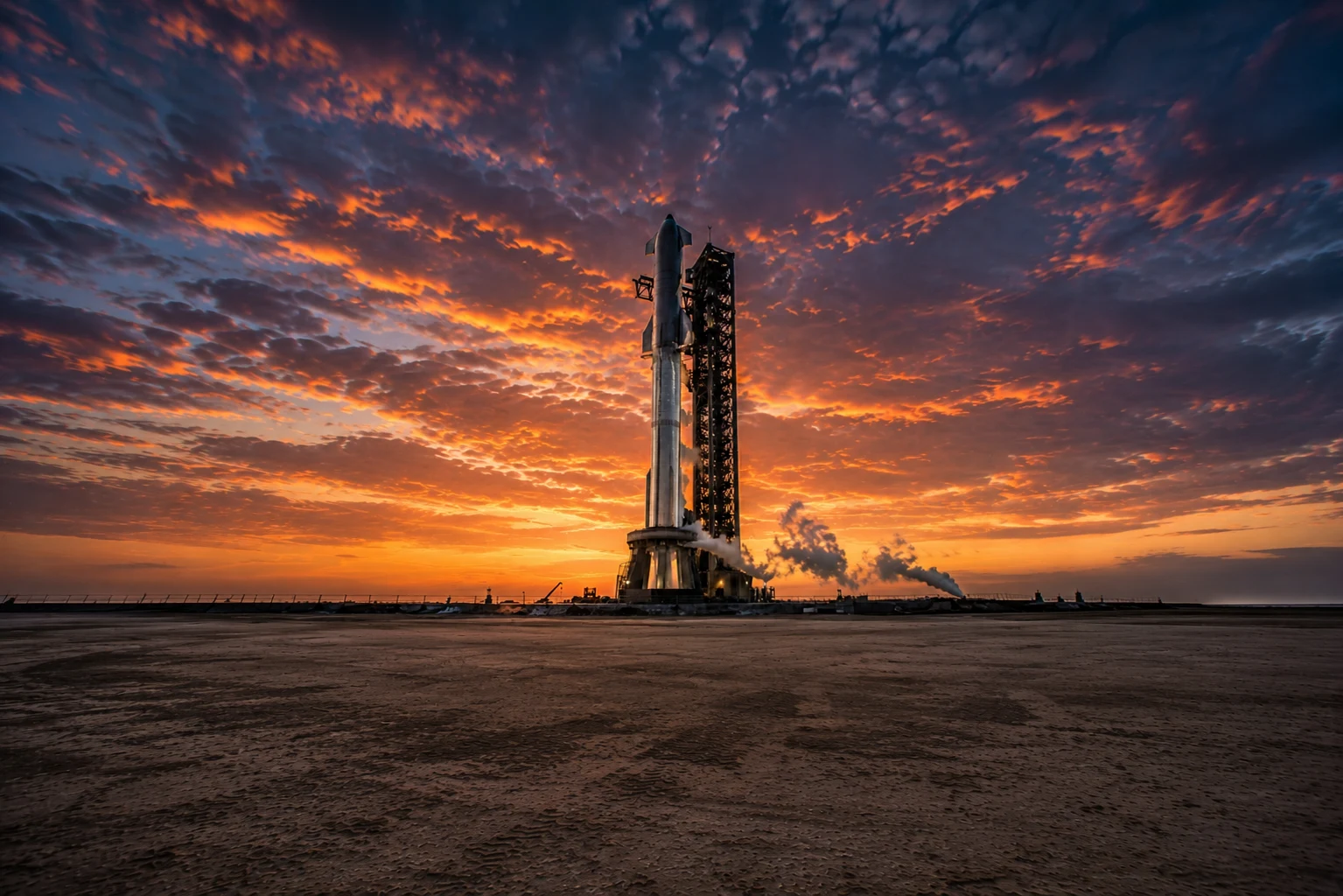
The core idea never changed. A fully reusable vehicle capable of carrying a hundred passengers to Mars, flying often enough and cheaply enough that colonisation becomes an industry rather than an expedition. That was the pitch in 2012 and it is the pitch now. Sitting on its Super Heavy booster, Starship stands roughly 400 feet tall and is designed to move up to a hundred tonnes of cargo per flight. Nothing remotely like it has ever been built.
Iterative, to Put It Charitably
The development programme has been, to put it charitably, iterative. Starhopper came first. It was a stubby test vehicle, built to hop rather than fly, and its job was simply to prove the Raptor engine could be trusted with a real airframe. It managed 150 metres. Then came the SN series, built and destroyed at SpaceX's facility in Boca Chica, Texas, through 2020 and 2021. Several exploded on landing in ways that were, depending on your relationship with risk, either alarming or instructive. SpaceX filmed all of it and posted it online, apparently unbothered.
The first integrated flight test came in April 2023, and whatever you think of the company's approach to risk, the footage was extraordinary. The most powerful rocket ever flown cleared the launch tower, got most of the way to the Gulf of Mexico, and then the flight termination system ended it. SpaceX called that a success, which was not entirely spin.
Mechazilla and What Came After
Not all of them went well, which anyone following the programme closely already knows. But October 2024 was different. Flight 5 achieved something that genuinely had not been done before: the Super Heavy booster separated from the Starship upper stage, flew itself back to the launch pad, and was caught in mid-air by the mechanical arms of the tower the SpaceX team calls Mechazilla. It took a few seconds to process what had just happened. SpaceX moved straight on to the next one, as it always does. Flight 12, in May 2026, drew less coverage but mattered just as much. The vehicle was significantly redesigned, running on new Raptor 3 engines, and the booster skipped the pad catch on its first outing with the new hardware. The upper stage came down in the Indian Ocean as planned. Two objectives, both met.
The Deadlines That Keep Moving
The targets are uncrewed Mars missions as early as 2026, crewed missions before the end of the decade, a self-sustaining city by the 2040s. That last one still sounds like science fiction. Musk knows it does, which has not stopped him saying it, and the laughter it once reliably produced has got noticeably quieter over the years. The deadlines have moved before, more than once, and the people who bet against him moving them again have generally lost that argument.
The engineering, at least, has not slipped. It is moving faster than almost any comparable programme in the history of rocketry, which is not a sentence anyone would have written confidently in 2008. NASA is depending on a Starship variant as the lander for Artemis crewed lunar missions, and satellite operators are watching payload costs that could reshape their economics entirely.
The question of whether any of this happens on Musk's schedule has become somewhat less interesting than the question of whether it happens at all. The history of SpaceX suggests that betting against the company is rarely as safe as it looks. Mars remains a long way off, but the largest rocket ever built is already flying. The next part of this series will examine what Starship actually has to do to get there, and why the hardest part of the journey has not yet begun.
Frequently Asked Questions
Who founded SpaceX and why
SpaceX was founded by Elon Musk in 2002. Musk had become convinced that humanity's long-term survival depended on becoming a multi-planetary species, and that no existing organisation was moving fast enough to make it happen. His original plan was to purchase Russian intercontinental ballistic missiles and repurpose them. When that fell through, he calculated that building rockets from scratch would be cheaper than expected and founded SpaceX to do it. The stated goals were to reduce the cost of access to space by a factor of ten and to make Mars colonisation possible within this century.
What is Starship and what is it designed to do?
Starship is SpaceX's fully reusable launch system, consisting of a spacecraft called Starship and a booster called Super Heavy. Standing roughly 400 feet tall, it is the largest and most powerful rocket ever built. It is designed to carry up to 100 passengers or 100 tonnes of cargo per flight, with the intention of making Mars colonisation economically viable by flying frequently and cheaply enough that the journey becomes routine rather than exceptional. A modified version is also being developed as the lunar lander for NASA's Artemis programme.
Has Starship successfully flown?
Yes. Starship has completed multiple test flights from SpaceX's facility in Boca Chica, Texas. Early flights ended in explosions, which SpaceX treated as data. Flight 5 in October 2024 achieved the first ever mid-air catch of a returning Super Heavy booster by the launch tower's mechanical arms. Flight 12 in May 2026 introduced a significantly redesigned vehicle with new Raptor 3 engines and completed a controlled splashdown of the upper stage in the Indian Ocean as planned.
When does Musk want to send humans to Mars?
Musk has stated he wants uncrewed Mars missions as early as 2026 and crewed missions before the end of the decade, with a self-sustaining city on Mars by the 2040s. Those timelines have slipped before and will likely slip again. The underlying engineering progress, however, is real and faster than almost any comparable programme in the history of rocketry. NASA is depending on a Starship variant as the lander for its Artemis crewed lunar missions, which gives the programme a deadline outside of Musk's control.
◆ Also In The Stars
◆ Go Deeper
Recommended
Elon Musk
Amazon ↗
Reentry: SpaceX, Elon Musk, and the Reusable Rockets That Launched a Second Space Age
Amazon ↗
Affiliate links — we may earn a small commission at no cost to you.