Imagine building a jumbo jet, flying it once, and setting it on fire in the ocean. That's how every rocket worked until SpaceX decided it was stupid.
Why Reusable Rockets Matter to SpaceX and Space Travel
◆ In Summary
Every rocket built before SpaceX was designed to be thrown away after one use. Engineers had good reasons for that. The physics of getting to orbit punishes anything extra you bring along, and a rocket built strong enough to survive reentry and fly again is, by definition, carrying extra. NASA tried it with the Space Shuttle and the maths never quite worked. SpaceX tried it anyway, failed in public more than once, and landed a booster on 21 December 2015. What changed afterwards was not just SpaceX's balance sheet.
◆ At a Glance
| First successful Falcon 9 landing | 21 December 2015, Landing Zone 1, Cape Canaveral |
| First reflown orbital-class booster | March 2017 (SES-10 mission) |
| DC-X (Delta Clipper) test programme | Mid-1990s, McDonnell Douglas, cancelled 1996 |
| NASA's X-33 and X-34 programmes | Cancelled in the early 2000s |
| NASA and CNES scepticism of SpaceX | Published assessments, 2014 |
| Private ventures that went bankrupt trying | Kistler Aerospace, Rotary Rocket (1990s) |
The Rocket That Never Came Back
Falcon 1 never had a chance to come home. It was not built to. Every one of its four flights ended the same way. Whether the mission failed or succeeded, the rocket ended up in the ocean, spent, gone. That was not a flaw in the design. That was the design. Almost every orbital launch system before SpaceX relied primarily on expendable hardware, a model that stretched back to the earliest days of rocketry. Fly it once. That was simply how rockets worked, for the better part of sixty years, and almost nobody in the launch industry believed a practical reusable orbital rocket was close to becoming reality.
The strange part is how long that stayed true even after people worked out it was a problem.
Why Engineers Thought Reusable Rockets Were a Fantasy
The maths is not friendly. Getting to orbit means fighting the rocket equation, which is unforgiving about extra mass. Landing gear, extra structure to survive reentry heat, extra fuel reserved for the landing burn rather than the climb. Studies suggested that recovering a booster through powered descent would require sacrificing a significant fraction of its propellant, reducing payload capacity in the process. Build a rocket tough enough to fly twice and you have, by definition, made it worse at the one job a rocket actually has to do.
NASA had already run a version of this experiment. The Space Shuttle was designed from the start to be reusable, a fully reusable spaceplane in its original 1968 concept before budget reality scaled it down to a reusable orbiter and solid boosters paired with an expendable tank. It flew, and its major components did fly again. What NASA discovered was that refurbishing those reusable components often cost far more than early planners had anticipated. Heat shield tiles needed replacing. Engines required extensive inspection and teardown. A standing army of technicians stood between one flight and the next. Reusable on paper. Expensive in every way that mattered.
So when SpaceX started talking about reusability in the 2000s, many in the industry rolled their eyes. They had reasons not to believe it, and fairly recent ones. In 2014, NASA and France's CNES both published assessments warning that the economics and technical challenges worked against SpaceX managing what the shuttle programme had already shown was difficult to make pay for itself. SpaceX ultimately demonstrated that those concerns, while reasonable, were not insurmountable.
The Attempts That Failed Before SpaceX Even Started
SpaceX was not the first to try this. Worth saying plainly, because the version of the story where Musk simply saw something nobody else had considered does not hold up well under scrutiny. McDonnell Douglas flew the DC-X, a small vertical takeoff and landing test vehicle, through the mid-1990s. It worked, more or less, and demonstrated that vertical landing itself was not the impossible part. The technology looked promising, but the programme ended before it could evolve into an operational launch system, and the last surviving prototype came apart in a 1996 landing accident. NASA tried again with X-33 and X-34, reusable launch vehicle programmes both cancelled in the early 2000s once costs ran away from the budget. Then two private ventures had a go, Kistler Aerospace and Rotary Rocket, spending their own money through the 1990s. Both went bankrupt before either vehicle flew anything close to what was promised.
None of that is a footnote. It is most of the reason the aerospace establishment treated reusability as a graveyard rather than an opportunity by the time SpaceX turned up.
How SpaceX Actually Solved It
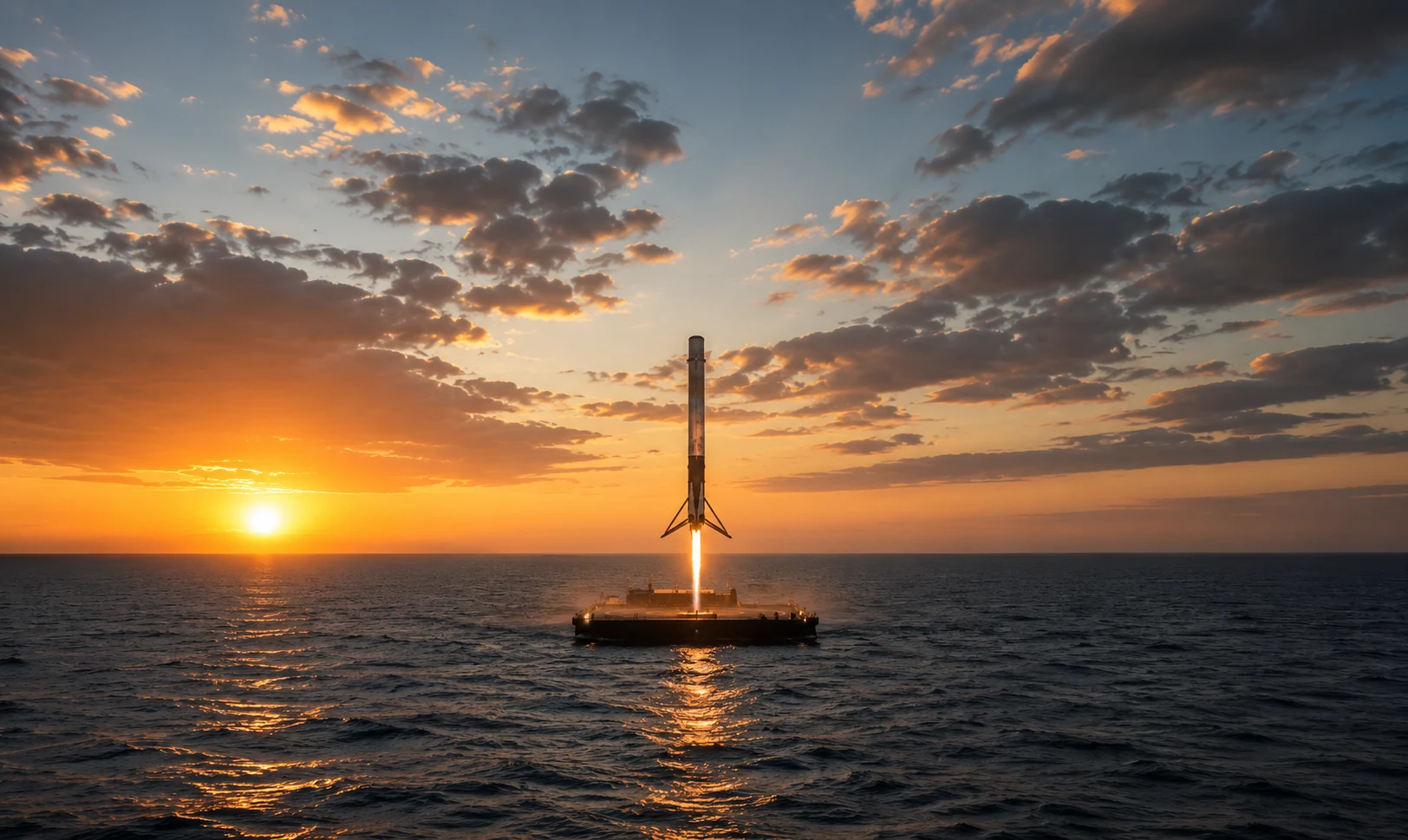
What changed was not a single breakthrough so much as SpaceX being willing to fail in public, repeatedly, without running out of money first, which is a lesson that should sound familiar from Falcon 1. Early Falcon 9 recovery efforts relied on parachutes, but none of the stages survived re-entry and ocean recovery intact. In late 2011 SpaceX dropped that approach entirely in favour of powered descent, essentially flying the booster backwards through its own exhaust to slow it down.
The early attempts at that were not subtle failures. Boosters tipped over on drone ships. One ran out of hydraulic fluid mid-landing and tipped straight into the ocean. SpaceX left the footage up rather than scrub it, which is not what most companies do with their failures. It did more for public trust in the programme, oddly, than a quiet run of successes would have.
Then, on 21 December 2015, a Falcon 9 first stage carrying eleven Orbcomm satellites came back down at Landing Zone 1 in Cape Canaveral. Upright. Intact. The first orbital-class booster ever to land itself. Musk called it a revolutionary moment on the call afterwards, and for once, that was not overstatement. A drone-ship landing followed a few months later, which sounds like the smaller achievement until you remember drone ships move. Then in March 2017, a booster that had already flown once in 2016 launched again. It was the first orbital rocket stage in history to fly twice. Nobody in the industry had a template for what came next.
Why Reusable Rockets Are Important
By the late 2010s, the cost of reaching orbit had fallen dramatically compared with the previous generation of launch vehicles, and reusability was doing most of the work. Fully reusable systems, the kind Starship is chasing now, are aiming to push the cost per kilogram lower still, and if that holds, it changes the arithmetic on more or less everything space-related.
Numbers like that do not sound dramatic until you notice what they unlock. Starlink would not exist at its current scale on expendable launch economics, thousands of satellites launched at a cadence no expendable rocket could have sustained on price alone. Reusability did not just make SpaceX cheaper than its rivals. It changed what was worth attempting at all.
I am not going to pretend the maths was ever really the interesting part of this story. Plenty of engineers understood the theory of reusable rockets decades before SpaceX flew one. It was the willingness, or possibly just the stubbornness, to keep failing at it in public until it stopped failing. Credit tends to land on Musk for reusability. Some of it should probably sit with a longer list of engineers who tried first and ran out of runway before they got the chance to finish.
What This Actually Changed
Falcon 1 proved SpaceX could reach orbit. Full stop, nothing more claimed than that. Reusability is a separate achievement and it is tempting to read it as the natural next chapter. NASA and other agencies had explored similar ideas for decades, but none had found a practical route to making them work at scale. There was no guarantee SpaceX would make reusable rockets work. Having actually done it is the reason a company that once struggled to even get rockets into orbit now flies more often than every other launch provider on Earth combined.
Frequently Asked Questions
Why were reusable rockets considered impossible?
The extra mass needed for landing gear, heat shielding and reserved landing fuel worked against the physics of reaching orbit, and NASA's Space Shuttle programme had already shown that reusable hardware could cost far more to refurbish than early planners expected.
When did SpaceX land its first reusable rocket?
On 21 December 2015, a Falcon 9 first stage landed upright at Landing Zone 1, Cape Canaveral, becoming the first orbital-class rocket booster ever recovered intact.
Did reusable rockets actually make launches cheaper?
Yes. The cost of reaching orbit fell substantially through the late 2010s as SpaceX moved from expendable to reusable Falcon 9 and Falcon Heavy missions, and fully reusable systems now in development are targeting further reductions.
Did anyone attempt reusable rockets before SpaceX?
Yes. NASA's DC-X programme in the 1990s and its X-33 and X-34 projects in the early 2000s were both cancelled, and private ventures Kistler Aerospace and Rotary Rocket went bankrupt attempting the same goal.
◆ Also In The Stars


◆ Go Deeper
Recommended
Reentry: SpaceX, Elon Musk, and the Reusable Rockets that Launched a Second Space Age
Amazon ↗
Liftoff: The inside story of Elon Musk, SpaceX and the dramatic origins of the world’s leading rocket company
Amazon ↗
Affiliate links — we may earn a small commission at no cost to you.