The engine works perfectly well on Earth, but the one thing it was actually built to do, turning Martian air into rocket fuel, has never been tried anywhere, by anyone.
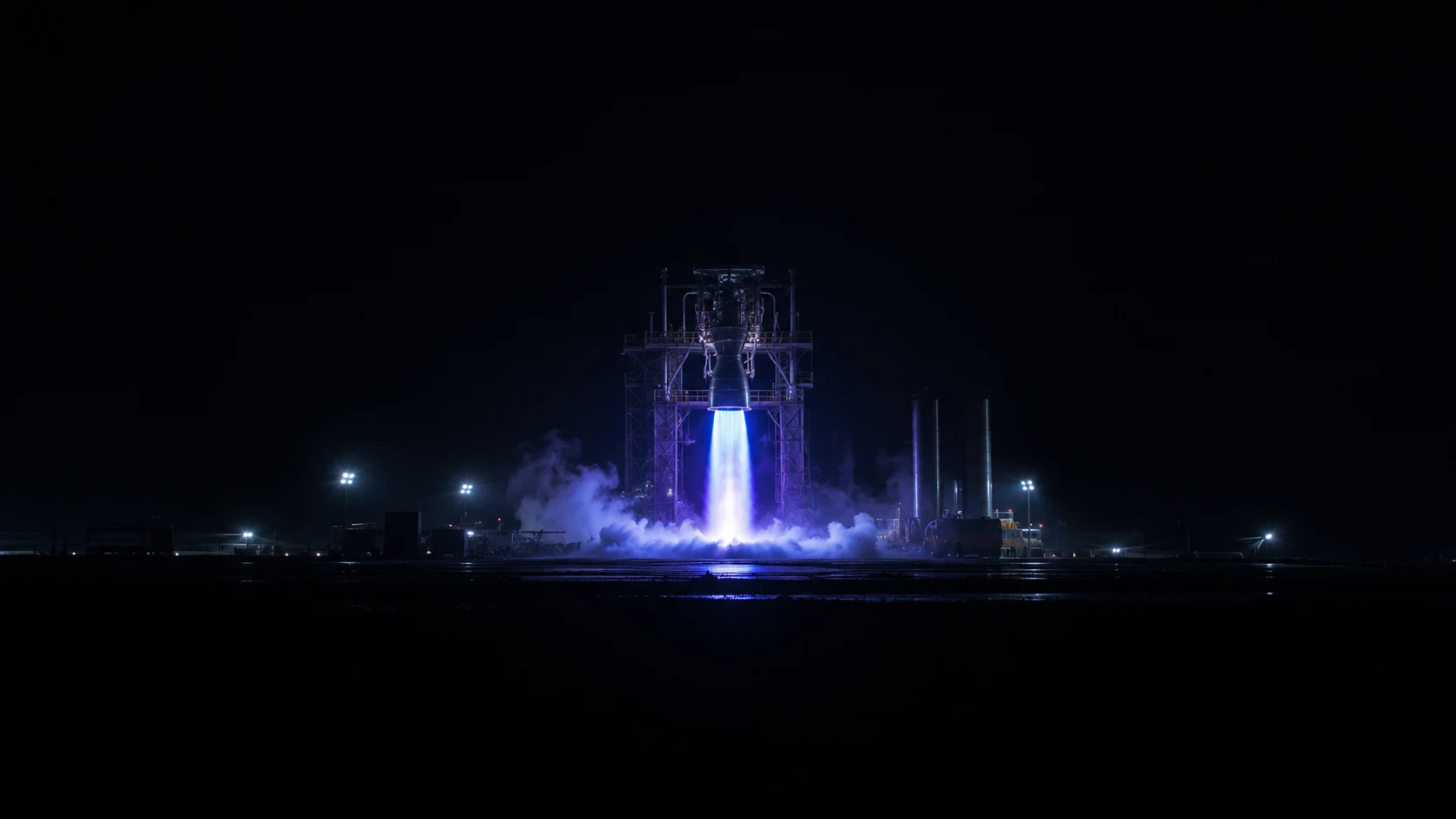
Inside the SpaceX Raptor Engine: The Physics Behind Starship

◆ In Summary
Raptor is only the third rocket engine in history built on a full-flow staged combustion cycle, and the first one to actually fly. It burns methane rather than kerosene or hydrogen, a choice made specifically because methane can theoretically be manufactured on Mars. Three generations in under a decade have taken it from 185 tonnes of thrust to 280, with a fourth still being tuned. It has already flown, already failed in public and already proven itself well enough that NASA intends to rely on it for future lunar missions. Whether it can do the one thing it was actually built for remains, as of mid-2026, completely unanswered.
◆ At a Glance
| Engine type | Full-flow staged combustion, methalox |
| First conceived | 2012, for the Mars Colonial Transporter concept |
| Fuel | Liquid methane and liquid oxygen |
| Current version | Raptor 3 |
| Raptor 3 thrust (sea level) | 280 tonnes-force |
| Raptor 3 engine mass | 1,525kg |
| Engines per Super Heavy booster | 33 |
How the SpaceX Raptor Engine Actually Works
Every liquid rocket engine has to solve the same basic problem before it can even think about producing thrust. Fuel and oxidiser have to reach the main chamber at extremely high pressure, often 200 bar or more, and propellant sitting in a tank is nowhere near that. Something has to physically pump it up to speed first, and that something needs power of its own to spin. Most engines get that power by burning a small slice of propellant separately, in a preburner, purely to create hot gas that spins a turbine. Every design does this. It's not optional, and it's not what separates them.
What separates them is what happens to that gas once it's finished spinning the turbine. The simplest engines just vent it overboard, often through a small visible side-exhaust of their own. A small fraction of the propellant is burned solely to spin the turbopump, then exhausted overboard rather than ever contributing to thrust. Merlin, the engine that powers Falcon 9, works exactly this way, and it's a perfectly good, well-proven design. It's just quietly throwing away a slice of the fuel's energy on every flight, because venting is the easy way out of a much harder plumbing problem: getting spent turbine gas back up to a pressure that can actually be forced into an already-pressurised main chamber.
Staged combustion refuses that shortcut. It routes the spent gas into the main chamber instead, so it burns a second time rather than escaping unused. To make that work at all, the preburner has to be deliberately overbuilt from the start, run at a pressure well above the main chamber's, specifically so there's still enough surplus left over after the turbine has taken its share to force the rest inside.
Raptor goes one step further again. Instead of a single preburner sharing its gas between both propellant pumps, it runs two entirely separate ones, one fuel-rich, one oxidiser-rich, each driving its own turbopump independently. Every drop of both propellants passes through the turbomachinery before combustion happens at all, hence the name, full-flow. Splitting the job this way means neither turbine has to run as punishingly hot as a single shared preburner would demand, and it removes the need for a seal designed to stop fuel and oxidiser gas ever meeting inside one pump, historically a real point of failure.
The oxidiser-rich half of that pairing is the genuinely hard part, and it's worth being honest about why nobody managed this before SpaceX. Hot, pressurised oxygen is one of the most aggressively corrosive environments in engineering. Past a certain point it doesn't just corrode metal, it can ignite it. The Soviets attempted a full-flow engine on exactly this principle in the 1960s, the RD-270, and never got it past static test firings before the programme was quietly cancelled in 1974. America's own attempt decades later, the Integrated Powerhead Demonstrator, only ever tested the pump-and-preburner front end. It never had a combustion chamber attached, so by any honest definition it was never a complete engine, and it certainly never flew. Raptor is the third serious attempt at this cycle in the whole history of rocketry, and the first one to get off the ground.
One more design choice worth flagging, because it says something about SpaceX's priorities rather than just its engineering. Raptor uses an electrical spark ignition system rather than the consumable TEA-TEB igniter fluid Merlin relies on. A spark can restart an engine almost indefinitely, with nothing to run out. A chemical igniter fluid, by contrast, is finite and has to be resupplied before the next light. For an engine that's meant to boost back, land, refly and one day relight itself somewhere nobody can post it a refill, that's not a minor detail.
Why the SpaceX Raptor Engine Runs on Methane
Most rockets burn kerosene or hydrogen. Raptor burns methane, and the reason has very little to do with the Moon, or Earth, or any launch SpaceX has actually flown to date.
Mars's atmosphere is roughly 95% carbon dioxide, and there's water ice sitting under a fair amount of its surface. Run those two through a century-old piece of chemistry called the Sabatier reaction and you get methane and oxygen out of the other end. In principle, a Starship that lands on Mars could manufacture its own return fuel from what's already there, rather than hauling every kilogram of it from Earth. Nobody else's propellant choice does that. Kerosene can't be made on Mars. Hydrogen theoretically could, but it's a nightmare to store for any length of time, boiling off far faster than methane even in a well-insulated tank.
That's the whole logic of the fuel choice, and it long predates SpaceX. Robert Zubrin was proposing exactly this, make your fuel where you're going rather than carry it there, back in the early 1990s, under a plan called Mars Direct. Raptor is really a piece of Zubrin's chemistry with thirty years and several billion dollars of engineering behind it.
Worth saying plainly: nothing about Raptor requires this fuel for a Moon mission. There's no CO2 atmosphere up there for the Sabatier reaction to work on. NASA's own Artemis architecture uses entirely different chemistry. The Space Launch System's core stage burns liquid hydrogen and liquid oxygen, and Orion itself relies on hypergolic propellants for its own manoeuvring. Nobody at NASA felt any need to match SpaceX's fuel choice, because nobody at NASA is trying to solve the Mars problem with that hardware. Methane on the Moon is not a technical necessity. It's a company using a government contract to keep testing equipment built for somewhere else entirely.
Three Generations in Under a Decade
The specs tell their own story, if you let them. Raptor 1 produced 185 tonnes-force of thrust and weighed just over two tonnes. Raptor 2 pushed thrust up to 230 tonnes-force while cutting the engine's own weight down, and SpaceX says production costs roughly halved in the process. Raptor 3, unveiled in 2024 and flying for the first time in 2026, reaches 280 tonnes-force, weighs barely 1,525kg and does away with the external heat shield earlier versions needed entirely, by moving the cooling and plumbing inside the engine itself. Musk has said thrust will keep climbing past 300 tonnes-force in later revisions, and that the mass the engine design still demands beyond the engine itself has, in his words, a lot of room for improvement. This is not a finished piece of hardware being described after the fact. It's still being built while it's being flown.
The road here wasn't smooth, and SpaceX has never pretended otherwise. Starhopper came first, a stubby test vehicle built purely to prove Raptor could be trusted inside a real airframe. It hopped 150 metres and stopped. The SN series that followed through 2020 and 2021 blew up on landing with enough regularity that SpaceX just left the footage online rather than bury it. Falcon 1 taught the company that failing in public, repeatedly, without running out of money first, was survivable. That lesson clearly stuck.
Flight 5, in October 2024, was the one that actually changed things. The Super Heavy booster separated, flew itself back to the launch tower and was caught in mid-air by the mechanical arms SpaceX calls Mechazilla. Flight 12, in May 2026, mattered just as much but drew far less attention. It was the first flight of Starship V3, the significantly redesigned vehicle carrying Raptor 3 for the first time. One of the 33 engines on the booster shut down early during ascent. The vehicle reached its planned trajectory anyway. That's not a perfect flight. It is, arguably, a more useful one, since it showed the design has margin built into it rather than requiring everything to go right.
One honest footnote here. Raptor is the more advanced engine by a wide margin, but it wasn't the first methalox engine to reach orbit. That distinction belongs to a much simpler Chinese rocket, LandSpace's Zhuque-2, which got there in July 2023, roughly two years before Raptor's full-flow staged combustion cycle carried anything into space at all. Sophistication and speed turned out to be different races.
What the SpaceX Raptor Engine Still Has to Prove
Raptor has flown. It has not yet done the thing NASA is actually paying SpaceX to demonstrate, which is refuelling a Starship in orbit using nothing but more Starships.
The plan requires a propellant depot parked in low Earth orbit, then somewhere between ten and fifteen tanker flights docking with it in turn, each one pumping cryogenic methane and oxygen across before the lunar lander tops itself up and heads onward. Nobody has attempted cryogenic propellant transfer at anything close to this scale. NASA's own March 2026 inspector general audit flagged it as one of the hardest unresolved pieces of the entire lunar architecture, and it's the same audit that raised concerns about Starship HLS's height and the single elevator astronauts would rely on to reach the surface.
Blue Origin's competing lander needs the same basic trick, just far less of it. Blue Moon Mark 2 requires roughly four tanker flights rather than ten to fifteen, because it was sized for the Moon specifically rather than inheriting the scale of a vehicle built for Mars. That's not really a methane problem. Blue Moon runs on liquid hydrogen, which is chemically harder to keep from boiling off than methane is, so it isn't as if SpaceX picked the fragile fuel and Blue Origin picked the robust one. Both companies are betting on a capability that has never been proven. SpaceX's version of that bet is simply larger, because the vehicle behind it was never really built with the Moon in mind.
The Engine That Was Never Really Finished
Strip away the Moon politics and the Mars marketing, and Raptor is still, honestly, a genuinely rare piece of engineering. Third full-flow staged combustion engine ever built. First one to fly. Three generations of real, measurable improvement inside a single decade, at a pace almost nothing else in the history of rocketry has matched.
What it hasn't done, not once, anywhere, is complete the loop it was actually designed for. Nobody has run the Sabatier reaction robotically, unattended, at industrial scale, on another planet, using power systems that also have to survive Martian dust and cold. That's not a criticism of the engine. Raptor has done everything asked of it so far, on Earth, in Earth orbit and soon on the Moon, assuming the tanker flights go to plan. The one job it exists to do has simply never come up yet.
Frequently Asked Questions
What fuel does the SpaceX Raptor engine use?
Raptor burns liquid methane and liquid oxygen, a combination known as methalox. SpaceX chose it because methane can theoretically be manufactured on Mars from the planet's carbon dioxide atmosphere and subsurface water ice, using a process called the Sabatier reaction.
Why did SpaceX choose methane instead of kerosene or hydrogen for Raptor?
Kerosene cannot be manufactured on Mars, ruling it out for a return trip that relies on local fuel production. Hydrogen theoretically could be, but it is far harder to store long-term due to a much lower boiling point. Methane offered the only practical balance between Earth-launch performance and Mars-manufacturability.
How is Raptor different from SpaceX's Merlin engine?
Merlin, which powers Falcon 9, burns kerosene and oxygen through a simpler open-cycle design. Raptor burns methane and oxygen through a full-flow staged combustion cycle, a far more complex and efficient design that only two other engines in history have attempted, and the only one of the three to actually reach flight.
Has Raptor 3 flown yet?
Yes. Raptor 3 made its first flight on Starship's twelfth integrated flight test on 22 May 2026. One of the vehicle's 33 engines shut down prematurely during the flight, but Starship still reached its planned trajectory.
◆ Also In The Stars



◆ Go Deeper
Recommended
Liftoff: The inside story of Elon Musk, SpaceX and the dramatic origins of the world’s leading rocket company
Amazon ↗
Affiliate links — we may earn a small commission at no cost to you.