This piece tests three claims about the French Revolution: two quatrains that don't hold up as well as their reputation suggests, and a tomb story that actually happened during the French Revolution.
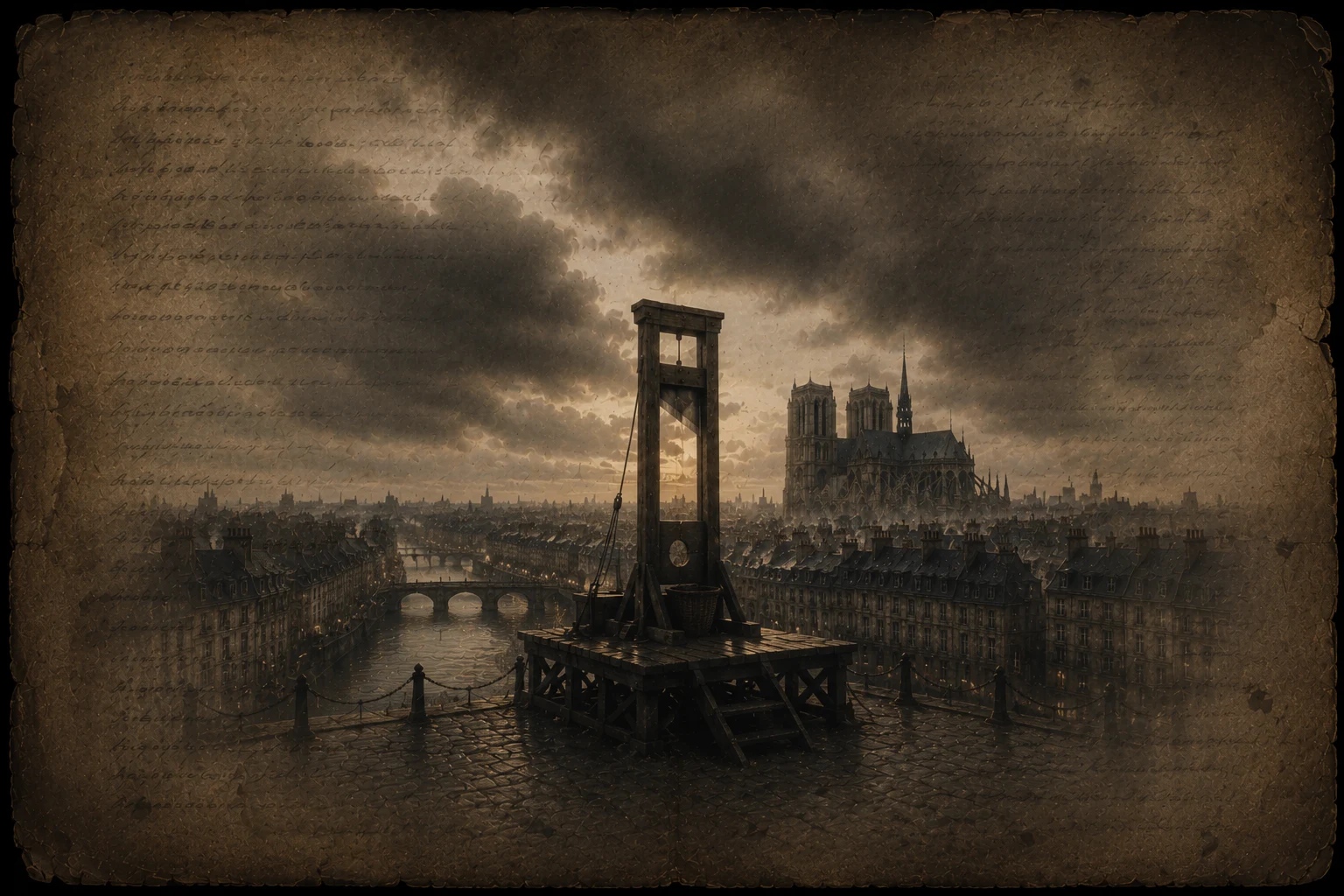
Did Nostradamus Predict the French Revolution?
◆ In Summary
Two Nostradamus quatrains are commonly linked to the French Revolution: Century 1, Quatrain 14, about headless idiots, and Century 10, Quatrain 9, about a wicked king. The first has a case worth taking seriously, even if probably coincidental. The second doesn't: a mistranslation, a reassigned king, and a line that fits nobody. A third story, about his tomb being desecrated during the Revolution, is not a prophecy at all but is worth untangling in its own right. Nobody connected either quatrain to a coming revolution before one arrived. Both readings only exist because people went looking for a fit after the Revolution happened, not before.
Two quatrains get cited as predictions for the French Revolution, and both of them work the same way: an event happens, and only afterwards does someone go looking for a verse that fits. That's a different kind of evidence to the Henry II prediction, where people were reading and taking the quatrain seriously years before he ever climbed into the saddle. There's no evidence anyone was consulting Nostradamus in 1789 wondering if the Bastille would fall. But does that mean the case falls apart entirely? Not necessarily, some of what follows is harder to wave away than the timing alone suggests.
The Headless Idiots
Century 1, Quatrain 14:
De gens esclave, chansons, chants & requestes,
Captifs par Princes & Seigneurs aux prisons:
A l'advenir par idiots sans testes,
Seront receus par divines oraisons.
De gens esclave, chansons, chants & requestes,
Captifs par Princes & Seigneurs aux prisons:
A l'advenir par idiots sans testes,
Seront receus par divines oraisons.
The first line roughly translates as songs and demands from an enslaved people. The next line is contested: either princes and lords sit captive in prisons, or the people are held captive by princes and lords, and which reading you take changes what this quatrain is actually describing. The final two lines describe the people's petitions eventually being received by headless idiots, by way of divine prayers, though what exactly that reception is supposed to mean is not obvious even in the original.
The case for this quatrain being a prediction of the French Revolution is easy enough to follow, or at least seems so on the face of it. France in 1789 was not literally enslaved, but its population had genuine grievances against a nobility they blamed for their suffering, and some of that population really was held in the Bastille when it fell. Then the detail everyone reaches for: headless idiots. Louis XVI and Marie Antoinette both lost their heads to the guillotine four years later, in 1793.
Proponents push the case further than just the two royal executions. What Nostradamus is credited with foreseeing isn't just that Louis XVI and Marie Antoinette died, but that they died by a machine built for the specific purpose of removing heads, the guillotine, arriving in a country whose population the quatrain had already cast as suffering and enslaved. Read the four details as one connected image rather than separate hits, an oppressed people, imprisoned nobility, headless fools receiving the outcome as scripture, and the case for Nostradamus's predictions looks very strong indeed.
The guillotine interpretation is certainly very convincing, but it is worth discussing what the words actually meant at the time of writing. "Idiots sans testes" was a stock 16th-century insult, headless idiots, meaning fools acting without sense, the way we might say someone had lost their head today. Nobody reading it in 1555 would have understood it as describing a specific machine, because that machine didn't exist yet and wouldn't for another 237 years. Whether Nostradamus meant something his own readers couldn't have understood is a different question, and not one anyone can settle either way. What can be said is that the case for the literal reading rests entirely on the word matching, after the fact, with nothing from before 1792 to suggest anyone read it that way at the time.
The "enslaved populace" framing has its own problem: when the Bastille fell, it held just seven prisoners (a detail well documented at the time and since), four forgers, two men detained for insanity, and one aristocrat, not the mass of the suffering the quatrain seems to describe. There's a second complication sitting underneath that one. The line usually rendered as princes and lords held captive in prisons can just as validly be read the other way round, the common people held captive by princes and lords, not the nobility behind bars at all. If that's the correct reading, this quatrain isn't describing the aristocracy's fall at all, it's describing ordinary oppression under them, which could just as easily belong to the France of 1750 as the France of 1793.
As is often the case with Nostradamus's predictions, it's left to us to decide whether there's any merit in the verse as a genuine foreshadowing of the French Revolution. For my part, the beheading detail is what keeps me from dismissing this one outright, even if I suspect it's coincidence more than insight.
The King Who Was Never King
Century 10, Quatrain 9:
De Castillon figuieres jour de brune,
De femme infame naistra souverain prince,
Surnom de chausses perhume luy posthume,
Onc Roy ne fut si pire en sa province.
De Castillon figuieres jour de brune,
De femme infame naistra souverain prince,
Surnom de chausses perhume luy posthume,
Onc Roy ne fut si pire en sa province.
The translation of the opening line is itself disputed, some readings treat "Castillon figuieres" as naming a real place, a castle at Figueras, others read it as "the castle of the orchards," with no specific location intended at all. What follows is less contested: a sovereign prince will be born of a disreputable woman. The third line is also contested, one tradition ties it to breeches or footwear left on the ground, another reads it as describing a child born after his father's death. The final line is the clearest of the four: never was there so bad a king in his province.
The popular telling attaches this quatrain to Louis XVII, the eight-year-old son of Louis XVI who inherited the throne on paper after his father's execution in 1793 but never ruled a day of it, dying in prison two years later. The case rests almost entirely on "Onc Roy," loosely read as "never a king," a boy who held the title without ever holding the power. What the popular telling has no answer for is the opening line. Neither Figueras nor an unnamed orchard connects to anything in Louis XVII's documented life. Even so, built on one striking phrase, it's an interesting, if slightly tenuous, case.
Unfortunately, it's also not what the quatrain says. Read straight, "Onc Roy ne fut si pire" means "never was there so bad a king," a statement about how wicked the king was, not a claim that he never reigned at all. Older commentary attaches the same verse to a different Louis entirely: Louis XIII, born to Marie de Medici, who some readers took as the "infamous woman" of the second line. Neither reading fares any better on the first line. Louis XIII was born at Fontainebleau, Louis XVII in Paris, and neither has any documented connection to Figueras or to an orchard. One quatrain, two candidate kings, two centuries apart, and the version that survives in popular culture isn't the one the French actually supports. It's the one that makes the better story.
Out of the two quatrains we've covered, the second one is clearly more tenuous. Between the mistranslated key phrase, the reassignment to a completely different king, and an opening line neither candidate can explain, it takes a fair amount of gymnastics to land anywhere near the French Revolution. There's certainly nothing as compelling as the "headless idiots" line.
One More Story
None of what follows is a prophecy, but there's a third story about Nostradamus worth telling properly. Even the events after his death turn out to be contested and mysterious in their own right.
Nostradamus was not originally buried where he rests today. His first grave was in the Couvent des Cordeliers, a Franciscan chapel in Salon-de-Provence. During the Revolution, that tomb was opened, either in 1791 or 1793 depending on which account you read, and the most consistent version has soldiers from Marseille breaking in looking for loot rather than answers. One is said to have drunk wine from Nostradamus' skull. He was reportedly dead within a day, killed either by a sniper or in a Royalist ambush that caught the soldiers the following morning. Afterwards, what remained of Nostradamus was moved to the Collégiale Saint-Laurent, where he's been ever since.
So Did Nostradamus Predict the French Revolution?
Take the two quatrains together and a pattern holds. The headless idiots line works only if you read a common insult as a literal, decades-premature description of a specific machine. The wicked king quatrain has been reassigned at least once, from one Louis to another, to fit whichever tragedy needed a home. Neither one was read as a prediction before the event it supposedly describes.
None of that means Nostradamus wrote nothing worth reading. It means the French Revolution material asks something different of the reader than the Henry II quatrain did. C1Q35 survives scrutiny because the timing runs the right way, the verse existed before the event and people took it seriously while it still mattered. Nothing here has that. What's left is retroactive pattern-matching, four centuries of readers finding a fit that the original words don't quite support, and I think that's worth saying plainly even if that's not what some want to hear.
The Great Fire of London is next, and that one has its own, entirely different problem.
Frequently Asked Questions
Did Nostradamus really predict the French Revolution?
Not entirely. Two quatrains are usually cited: one describing headless idiots, the other a wicked king. The first has a genuine, if likely coincidental, case, the beheading detail lines up with the guillotine in a way that's hard to fully dismiss. The second is much weaker: a mistranslated phrase, a verse reassigned to a completely different king in older commentary, and an opening line neither candidate can explain. Unlike the Henry II prediction, which was read and taken seriously before the event it describes, neither French Revolution quatrain was connected to a coming revolution before one arrived.
What is the headless idiots quatrain?
Century 1, Quatrain 14 describes an enslaved populace and princes held captive in prisons, received in the future by headless idiots. It is often linked to the Bastille and the guillotine executions of Louis XVI and Marie Antoinette. However, headless idiots was a common 16th-century insult meaning fools, not a literal reference to decapitation. The guillotine itself was not adopted in France until 1792, 237 years after the quatrain was published.
Is the Nostradamus tomb story true?
Largely, yes. Nostradamus was originally buried in the Couvent des Cordeliers in Salon-de-Provence. During the French Revolution, either in 1791 or 1793 depending on the account, soldiers broke into that tomb looking for loot, and one is said to have drunk wine from his skull and died within a day, killed either by a sniper or in a Royalist ambush the following morning. His remains were later moved to the Collégiale Saint-Laurent, where they remain today.
Who was the king who was never king in Nostradamus's prophecy?
Century 10, Quatrain 9 is often linked to Louis XVII, the son of Louis XVI who technically inherited the throne after his father's execution but never reigned, dying in prison in 1795. However, the quatrain's actual text, Onc Roy ne fut si pire en sa province, translates more accurately as never was there so bad a king, a comment on cruelty rather than a claim about never ruling. Older commentary attaches the same verse to a different king entirely, Louis XIII.
◆ Also In The Stars


◆ Go Deeper
Recommended
Nostradamus: Complete Prophecies for the Future: The Complete Prophecies for the Future (Sunday Times No. 1 Bestseller)
Amazon ↗
Affiliate links — we may earn a small commission at no cost to you.