Nostradamus left behind 942 deliberately obscure quatrains, designed to outlive their author. Most faded into obscurity anyway. Two of his prophecies never did.

Nostradamus's Quatrains: Inside His Book of Predictions

◆ In Summary
Nostradamus published nearly a thousand four-line prophecies in his own lifetime, written in a language designed to resist interpretation. Two quatrains have proved harder to dismiss than the rest. One contains the word Hister. The other names a specific year. The arguments have been running for four centuries and the text has not changed.
◆ At a Glance
| Published | Les Prophéties, 1555 to 1568 |
| Total quatrains | 942 surviving verses |
| Structure | Ten volumes called Centuries |
| Languages | 16th-century French, Latin, Greek |
| Most discussed | Century 10, Quatrain 72 (1999 prophecy) |
| Hitler quatrain | Century 2, Quatrain 24 (Hister) |
| Hister origin | Latin name for the lower Danube |
| Nostradamus died | 1566, collection unfinished |
In the summer of 1993, after several frustrating years struggling with Ancient Greek, I was handed a paperback as a prize for my troubles. Nostradamus: The Next Fifty Years, by Peter Lemesurier. The prize label is still inside the front cover. I checked before writing this. What comes back most clearly is not any specific prophecy but the feeling of reading it for the first time. Old language, applied to recent events, with enough precision to make you stop. That is the thing about Nostradamus. You pick up one of his quatrains thinking you are about to dismiss it, and then something catches. Not always. But sometimes enough to give you pause.
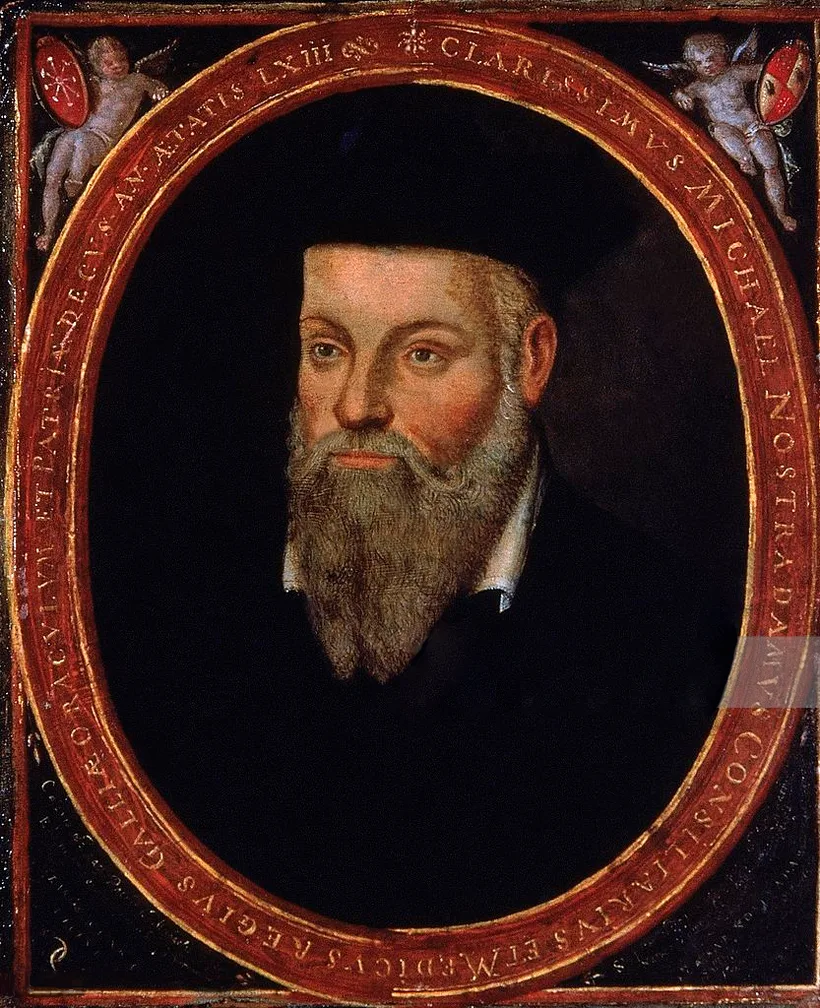
There are 942 of them. Nearly a thousand four-line verses, written in a mixture of 16th-century French, Latin, Greek and something that occasionally resembles none of the above, published in a series of volumes called Les Prophéties from 1555 onwards. The editions continued after his death in 1566, with the most complete appearing in 1568. Nostradamus was still revising the collection when he died. He never finished. Whether 942 quatrains is a complete work or a fragment of something larger is one of the smaller arguments people have been having about him for four and a half centuries.
Why Are Nostradamus's Quatrains So Difficult to Interpret?
The problem is simple. Nostradamus rarely tells you who a quatrain is about, when it applies, or even whether it refers to the past or the future. Everything depends on interpretation.
The Hister Prediction: Century 2, Quatrain 24
The structure of the quatrains is worth understanding before anything else, because it explains a great deal about why the arguments never end. A quatrain is four lines. Each of the ten volumes, which Nostradamus called Centuries, was intended to contain one hundred of them (the seventh is incomplete, which has fed its own separate theories). The verses arrive in no particular order and announce nothing about their subjects, which turns out to matter enormously. No index exists, no subject headings, just a pair of dedicatory letters that raise as many questions as they settle. Fitting, for a man who made obscurity his method. Nostradamus said, in his own prefaces, that the obscurity was deliberate. Protection against heresy charges, he claimed. That explanation is plausible enough. It is also, conveniently, impossible to disprove. Here is what a quatrain actually looks like:
Century 2, Quatrain 24:
Bestes farouches de faim fleuves tranner,
Plus part du champ encontre Hister sera,
En caige de fer le grand sera treisner,
Quand Rin enfant Germain observera.
Bestes farouches de faim fleuves tranner,
Plus part du champ encontre Hister sera,
En caige de fer le grand sera treisner,
Quand Rin enfant Germain observera.
The language compounds the problem. Even a native French speaker approaching the original text is working against the grain. The 16th-century French is archaic by modern standards, the syntax frequently inverted, the proper nouns either Latinised or invented. Names of places and people appear in forms that require interpretation before interpretation of the prophecy can even begin. This is either the inevitable consequence of writing in the sixteenth century or a very effective defence against anyone ever proving you wrong. Possibly both.
A modern English rendering runs roughly: beasts mad with hunger will swim across rivers, most of the battlefield will be against Hister, the great one will be dragged in a cage of iron, when the German child observes the Rhine. As with all quatrain translations, this is an approximation; the original resists anything cleaner.
You can see immediately why this quatrain has attracted attention. Hister sits in the second line. For anyone reading after 1933, the association with Adolf Hitler is difficult to ignore, and the surrounding detail, battlefields, rivers, something or someone dragged in iron, sits uncomfortably close to the imagery of the Second World War. What makes that interesting rather than merely convenient is this: both Allied and Axis propagandists found the verse useful during the conflict itself. The same quatrain, serving opposite causes.
The 1999 Prediction: Century 10, Quatrain 72
The counter-argument deserves a proper hearing. Hister was a Latin name for the lower Danube, a geographical reference Nostradamus used elsewhere. The word predates Hitler by roughly two millennia. Critics argue, with some justification, that the Hitler reading is retroactive. The quatrain was applied to the war after the fact, not before it, and the fit is a matter of selective reading rather than genuine prediction. The cage of iron alone has attracted half a dozen competing interpretations.
And yet. The Hister quatrain is not the only one where the problems with easy dismissal become apparent.
The 1999 quatrain is harder to set aside.
Century 10, Quatrain 72:
L'an mil neuf cens nonante neuf sept mois,
Du ciel viendra un grand Roy d'effrayeur.
Resusciter le grand Roy d'Angolmois,
Avant après Mars régner par bon heur.
L'an mil neuf cens nonante neuf sept mois,
Du ciel viendra un grand Roy d'effrayeur.
Resusciter le grand Roy d'Angolmois,
Avant après Mars régner par bon heur.
Of all 942 quatrains, Century 10, Quatrain 72 has probably generated the most argument. What tends to get lost in those arguments is what actually makes it unusual. It contains a specific date. Most quatrains contain nothing of the sort, which is precisely what makes retroactive application so easy. This one names a year and a month with a confidence Nostradamus rarely deployed elsewhere. A loose translation runs something like this: The year 1999, seventh month. From the sky will come the great King of Terror, who will bring back to life the great King of the Mongols, before and after whom Mars reigns by good fortune.
July 1999 arrived, and nothing happened that looked remotely like a king of terror descending from the sky. The interpretation industry, predictably, got to work. Some argued the Gregorian calendar adjustment meant the date was slightly off. Others reached for the total solar eclipse that crossed Europe on 11 August 1999, which was close in time if not in month, and not obviously a king. Others still pointed to the NATO bombing of Yugoslavia earlier that year, or to various geopolitical tremors that could, with sufficient goodwill, be dressed in the language of terror and kings. None of it is entirely satisfying. The date is there, the event is not, and no amount of calendrical adjustment fully closes the gap.
What the 1999 quatrain illustrates, better than almost any other, is the mechanism by which Nostradamus maintains his hold. The specific prediction fails, and the response is never to conclude it was wrong but to expand the frame of what counts as fulfilment. Every prophetic tradition operates this way, finding fulfilment somewhere when the original target is missed. The difference between Nostradamus and figures like Mother Shipton or Baba Vanga comes down to something simple. He published his own work, in his own lifetime, and the printed record has been sitting there ever since. The text is fixed, the dates are recorded. The interpretive gymnastics have been on public record for four centuries.
In a sense, Nostradamus created a Schrödinger's cat situation for each of his verses. The prophecy is simultaneously real and not real, sitting in superposition until someone opens the box and finds whatever they brought with them. If that was deliberate, and I suspect it was, it says something remarkable about the man. He wasn't just writing prophecy. Engineering ambiguity might be closer to it.
The pieces that follow this one take the most discussed quatrains one at a time, the ones that have stuck most persistently to specific historical events, and look at them honestly. The Henry II verse comes first, with the French Revolution and the Great Fire of London to follow. Not to prove Nostradamus right or wrong, but to understand why these particular verses have proved so difficult to shake off.
Frequently Asked Questions
What is a Nostradamus quatrain?
A quatrain is a four-line verse. Nostradamus published his in a collection called Les Prophéties, released in stages between 1555 and 1568. Each verse is written in a mixture of 16th-century French, Latin and Greek, with proper nouns either Latinised or invented, which makes even basic translation a matter of interpretation.
How many quatrains did Nostradamus write?
There are 942 surviving quatrains, spread across ten volumes Nostradamus called Centuries. Each was intended to contain 100 verses, though the seventh is incomplete. Nostradamus was still revising the collection when he died in 1566 and never finished it.
What is the most famous Nostradamus quatrain?
Century 10, Quatrain 72 is probably the most discussed. It contains a specific date, the year 1999 seventh month, and predicts a great king of terror descending from the sky. The date passed without obvious fulfilment, but the verse has generated more interpretive argument than almost any other in the collection.
Did Nostradamus predict Hitler?
Some readers associate Century 2, Quatrain 24 with Adolf Hitler because it contains the word Hister. Critics point out that Hister was also a Latin name for the lower Danube, used by Nostradamus himself in other writings before Hitler was born. The verse was applied to the Second World War by both Allied and Axis propagandists, which tells you something about how it works.
The Nostradamus Series
◆ Also In The Stars

◆ Go Deeper
Recommended
Nostradamus: The Next 50 Years: Covering The Forthcoming Invasion Of Europe
Amazon ↗
Affiliate links — we may earn a small commission at no cost to you.