Published in 1555, four years before Henry II died jousting in a manner the verse seems to describe. Catherine de Medici was already unsettled by it before the lance ever broke.
Nostradamus Henry II Prediction: The King's Death Explained
◆ In Summary
Century 1, Quatrain 35 is the Nostradamus verse that made his reputation while he was still alive. Published in 1555, it appears to describe the death of Henry II of France in a jousting accident four years later. The correspondences are specific: a gilded visor, a pierced eye, a younger man overcoming an older one in single combat. The sceptical objections are also real, and they have been made for four centuries. What neither side can easily explain away is that Catherine de Medici was already frightened by this quatrain before her husband died.
What Is the Nostradamus Henry II Prediction?
Most of Nostradamus's quatrains follow the same pattern. Something happens, then interpreters go looking, and eventually they find a verse that fits if nobody presses too hard on the original French. C1Q35 is different, because it all happened while Nostradamus was alive. If you were constructing the strongest possible case that Nostradamus had genuine prophetic ability, this is the quatrain you would reach for first. It was published in 1555. The event it appears to describe happened in 1559. The people who were in a position to know, including the queen of France, were reading this verse and taking it seriously before Henry II ever climbed into a saddle on that June afternoon.
Century 1, Quatrain 35:
Le lion jeune le vieux surmontera,
En champ bellique par singulier duelle:
Dans caige d'or les yeux lui crevera,
Deux classes une, puis mourir, mort cruelle.
Le lion jeune le vieux surmontera,
En champ bellique par singulier duelle:
Dans caige d'or les yeux lui crevera,
Deux classes une, puis mourir, mort cruelle.
This roughly translates: A young lion overcoming an old one. A field of combat, a single fight. Eyes pierced through a golden cage. Two wounds become one, then a cruel death. That is the working sense of it, line by line, though as with every quatrain the translation is where the arguments begin.
The Jousting Event That Killed Henry II
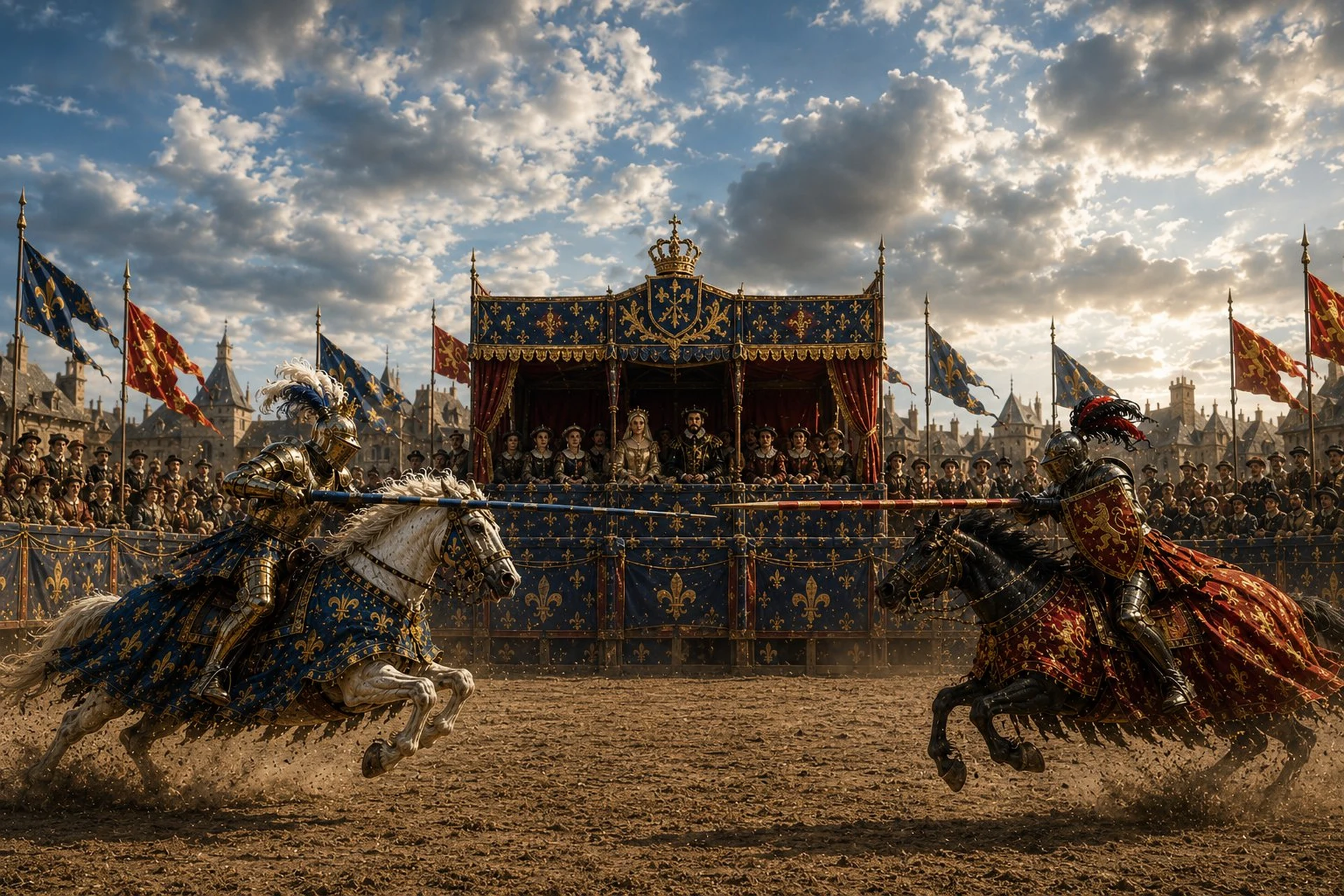
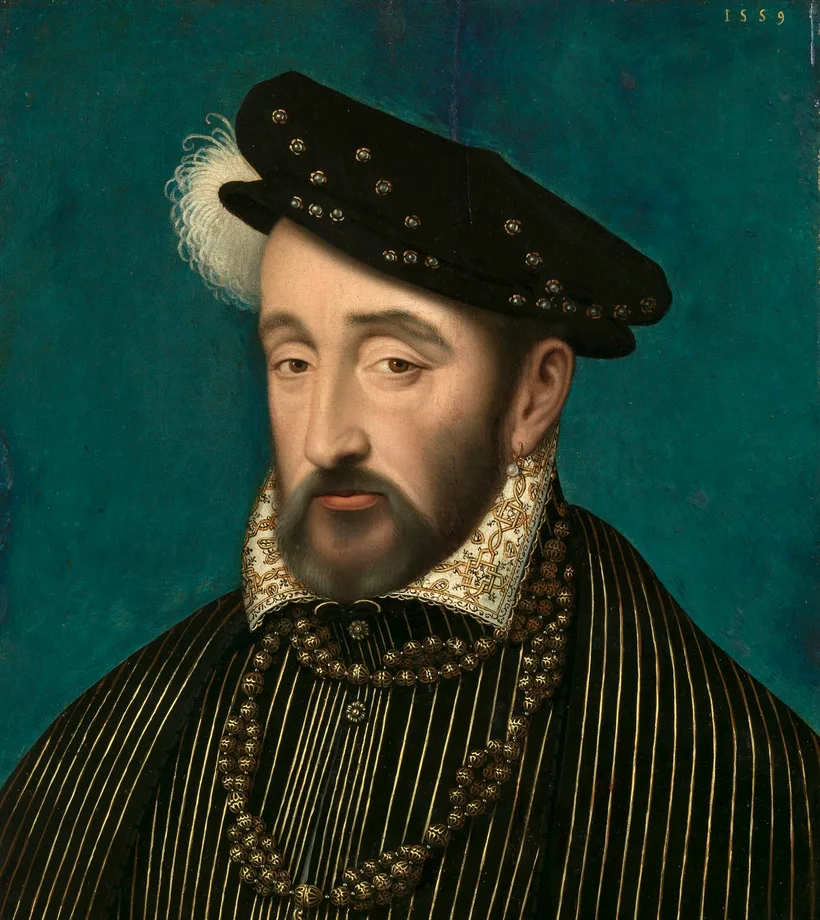
On 30 June 1559, Henry II of France rode into a jousting tournament at the Place des Vosges in Paris. The Italian Wars had just ended after sixty-five years. His daughter Elisabeth was being given to Philip II of Spain in marriage, his sister Margaret to the Duke of Savoy. Henry arranged a tournament, as kings did. He was forty, an experienced jouster, not a man who appeared to think the morning's festivities had anything to teach him.
Several people in that audience would never quite recover from what they saw. Catherine de Medici had begged him not to compete, citing giddiness he had mentioned that morning, and been ignored. Diane de Poitiers (Henry's long-standing mistress) watched him ride out in her colours, as he had done for two decades. Mary Queen of Scots, sixteen, newly married to his son Francis, watched from the stands.
Henry acquitted himself well. He unhorsed several opponents and the day was effectively won. But in a late pass he came uncomfortably close to being unseated by Gabriel de Montgomery, captain of his own Scots Guard. Montgomery was eleven years younger, twenty-nine to Henry's forty. Henry had taken a knock but was unhurt. The sensible thing, at that point, was to declare the day's sport concluded. Catherine urged him to stop. So did the Duke of Savoy. Montgomery himself, acutely aware of the awkwardness of having nearly unseated his own king, asked to be excused a further pass.
What happened next is the part everyone who later found prophetic significance in the afternoon had to reckon with. Henry knew the risks, had been warned by his queen, his ally and his own opponent, and rode out anyway. That detail does not make the prophecy look better. It makes it impossible to evaluate cleanly. Catherine had summoned Nostradamus to court over this specific verse. Montgomery was already uneasy about the pass. Henry had been told, and chose to ignore it, or disprove it, or simply refused to be governed by it. Whatever his reasoning, the prophecy was already inside the room before the lance was lowered. We cannot know what would have happened if nobody had read the quatrain. As a test of prophetic ability, the experiment was compromised before it began. For sceptics, that single fact matters more than any of the textual objections that follow.
How Henry II Died
A long wooden splinter from Montgomery's shattered lance drove through the gilded visor and into Henry's right eye, reaching the brain. He was carried from the lists (the jousting arena), bleeding, barely conscious. Ambroise Paré arrived within the hour. He was the finest surgeon in France, which in 1559 meant he could remove the wooden fragments from the orbit, bleed the patient and hope for the best.
Philip II of Spain sent Andreas Vesalius from Brussels, three days' journey, the most celebrated physician in Europe making his way to a bedside where there was nothing useful left to do. Vesalius examined the king on 3 July and concluded privately that Henry would not recover. He was right. Henry II died on 10 July 1559, of what modern medicine identifies as periorbital cellulitis and sepsis spreading from the wound. Ten days after the lance struck. He was forty years old, which suddenly made him the older lion in a verse everyone had already read.
Does Quatrain C1Q35 Match Henry II's Death?
Matching the quatrain's key elements to the event is not difficult. The golden cage is the gilded visor. The young lion overcoming the old: both men carried lions on their shields, Montgomery was the younger by eleven years. The field of combat in single fight: a jousting tournament. He will pierce his eyes: a wooden splinter through the right eye into the brain. Then he dies a cruel death: ten days of agony, the two greatest physicians of the age powerless, death from infection in a room where he kept calling for Diane and Catherine refused to let her enter.
The correspondences are specific enough to stop you. But there are strong counter-arguments.
Why Sceptics Dispute the Prediction
Peter Lemesurier spent decades working from the original Old French rather than translations and produced the most rigorous sceptical treatment of the quatrains available. His objections to the Henry reading are substantial. The word lion appears twice in the quatrain, describing both combatants. Lions were standard heraldic imagery in sixteenth-century France, appearing on noble shields, banners, armour and architecture at a frequency that makes the detail far less specific than it first appears. Applying young lion and old lion to any jousting contest between men of different ages is not a difficult fit. Nearly any such contest would qualify.
The word crevera, to pierce or hollow out, is applied to eyes in the plural: luy crevera les yeux. Henry lost the use of one eye, not two. Not a trivial discrepancy. In any other evidentiary context, one eye versus two would be entered in the ledger as a miss, and that would be the end of it.
Deux classes une is arguably the most disputed line in the quatrain. The standard translation is two wounds in one, reading it as two lance fragments causing a single compound injury. But classes in sixteenth-century French does not straightforwardly mean wounds. It is closer to collisions, or blows. Some translators have rendered the line as two strikes become one, referring to the two jousting passes colliding into a single fatal outcome. Others read it as referring to two military forces entirely, which pulls the Henry reading apart and points toward some future battlefield encounter that has never been satisfactorily identified. The original is genuinely ambiguous. That is not a translation failure. It is the architecture of the verse.
Lemesurier's broader argument was that Nostradamus, writing in 1555, almost certainly had a contemporary meaning in mind. Jousting accidents were common at Tudor and Valois courts. Lions appeared on dozens of noble family shields. The golden visor was not unique to Henry. The verse could be fitted to other events with similar effort, and probably was before the Henry reading achieved dominance and shut down the alternatives.
These are fair points and they have been made for four centuries. But the quatrain's power still persists.
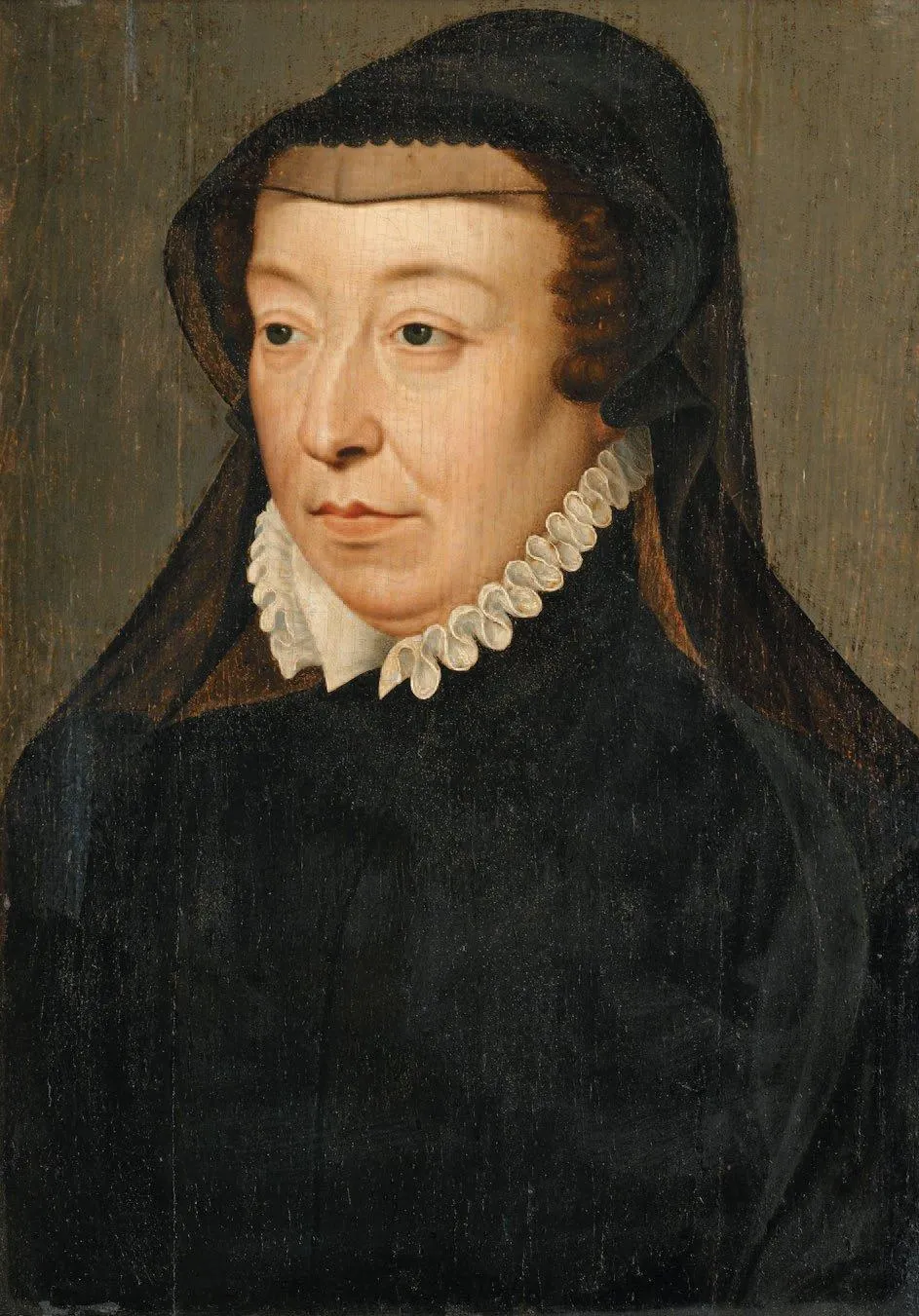
Catherine de Medici and Nostradamus
Later accounts hold that Catherine summoned Nostradamus to Paris in 1555, the same year the verse appeared, concerned by his writings and by C1Q35 in particular, though how explicitly the quatrain was linked to Henry at that stage is harder to establish. Some sources suggest members of the court were already discussing the verse before Henry's death, though the contemporary documentation is thinner than the tradition implies. What appears clear is that the verse was not simply retrieved from a drawer after the event and fitted onto the facts, which is the mechanism that explains most of the other famous hits. The connection was being made, by people with reasons to take it seriously, while Henry was still alive.
After his death, Catherine kept Nostradamus in royal employ and continued to consult him on matters involving the royal children. She did not dismiss him as a lucky guesser. Whether this reflects conviction or simply the political difficulty of publicly repudiating the court's astrologer is a question nobody can answer now. Both explanations are possible.
Did Nostradamus Really Predict Henry II's Death?
The 1999 quatrain, covered in the previous piece in this series, named a specific date and nothing clearly corresponding to it occurred. C1Q35 named no date at all, used imagery that required interpretation, and the interpretation was contested even among people who took Nostradamus seriously. And yet the fit, when the event came, was close enough to shake people who were not otherwise credulous. Sixteenth-century France had no shortage of educated sceptics. The verse did not convince them all. It convinced enough of them to matter.
C1Q35 is the quatrain that most resists dismissal. Not because it constitutes proof, but because the counter-arguments require accepting that several specific details, the lions on both shields, the golden visor, the pierced eye, the singular manner of death, the age gap between the two men, were individually unremarkable coincidences that happened to align. Each one separately can be explained. The problem is the accumulation, and the accumulation is why people have been arguing about this particular verse since the summer of 1559 rather than letting it go the way of most of the others.
The French Revolution quatrain comes next. It works differently, and the problems it raises are not the same ones.
Frequently Asked Questions
What is Century 1, Quatrain 35?
C1Q35 is a four-line verse from Nostradamus's Les Prophéties, published in 1555. It describes a young lion overcoming an older one in single combat, piercing his eyes through a golden cage, followed by a cruel death. It is considered one of the most debated quatrains in the collection because of its apparent connection to the death of Henry II of France in 1559.
How did Henry II of France die?
Henry II died on 10 July 1559, ten days after a jousting tournament at the Place des Vosges in Paris. During a pass against Gabriel de Montgomery, Montgomery's lance shattered and drove a wooden splinter through Henry's gilded visor into his right eye, reaching the brain. He died of periorbital cellulitis and sepsis. He was forty years old.
Why do sceptics dispute the Nostradamus prediction?
The main objections are that lions were common heraldic imagery in sixteenth-century France and could apply to many jousting contests, that the quatrain refers to eyes in the plural while Henry lost only one, and that the key phrase Deux classes une is genuinely ambiguous in Old French. Peter Lemesurier, who worked from the original French, argued the verse could be fitted to other events with similar effort.
Did Catherine de Medici believe Nostradamus predicted Henry's death?
Later accounts hold that Catherine summoned Nostradamus to court in 1555, concerned by his writings and by C1Q35 in particular. After Henry's death she kept Nostradamus in royal employ and continued consulting him. Whether this reflected genuine conviction or political necessity is a question historians have not resolved.
The Nostradamus Series
◆ Also In The Stars



◆ Go Deeper
Recommended
The Unknown Nostradamus: The Essential Biography
Amazon ↗
Catherine de Medici: A Biography by Leonie Frieda
Amazon ↗
Nostradamus and His Prophecies
Amazon ↗
Affiliate links — we may earn a small commission at no cost to you.