
A princess who could see the future, a city that refused to listen, and a curse that made truth powerless. The story of Cassandra has survived for more than two thousand years because being right is not always enough.
◆ In Summary
Cassandra was a Trojan princess granted the gift of prophecy by Apollo and then cursed, when she refused him, so that no one would believe her. She warned against the horse. Troy burned anyway. Her story comes from sources that don't fully agree, but what every version preserves is the same: she was right, she was ignored, and her name has carried that experience ever since.
Cassandra first crossed my radar at school, somewhere inside the Iliad, and I filed her away almost immediately. Homer doesn't give her much story time. She's a daughter of Priam, just one of numerous minor characters adding flavour to the mix, and the prophecy and the curse that define her in the popular imagination aren't really what the Iliad focusses on. I had no particular reason to pay attention.
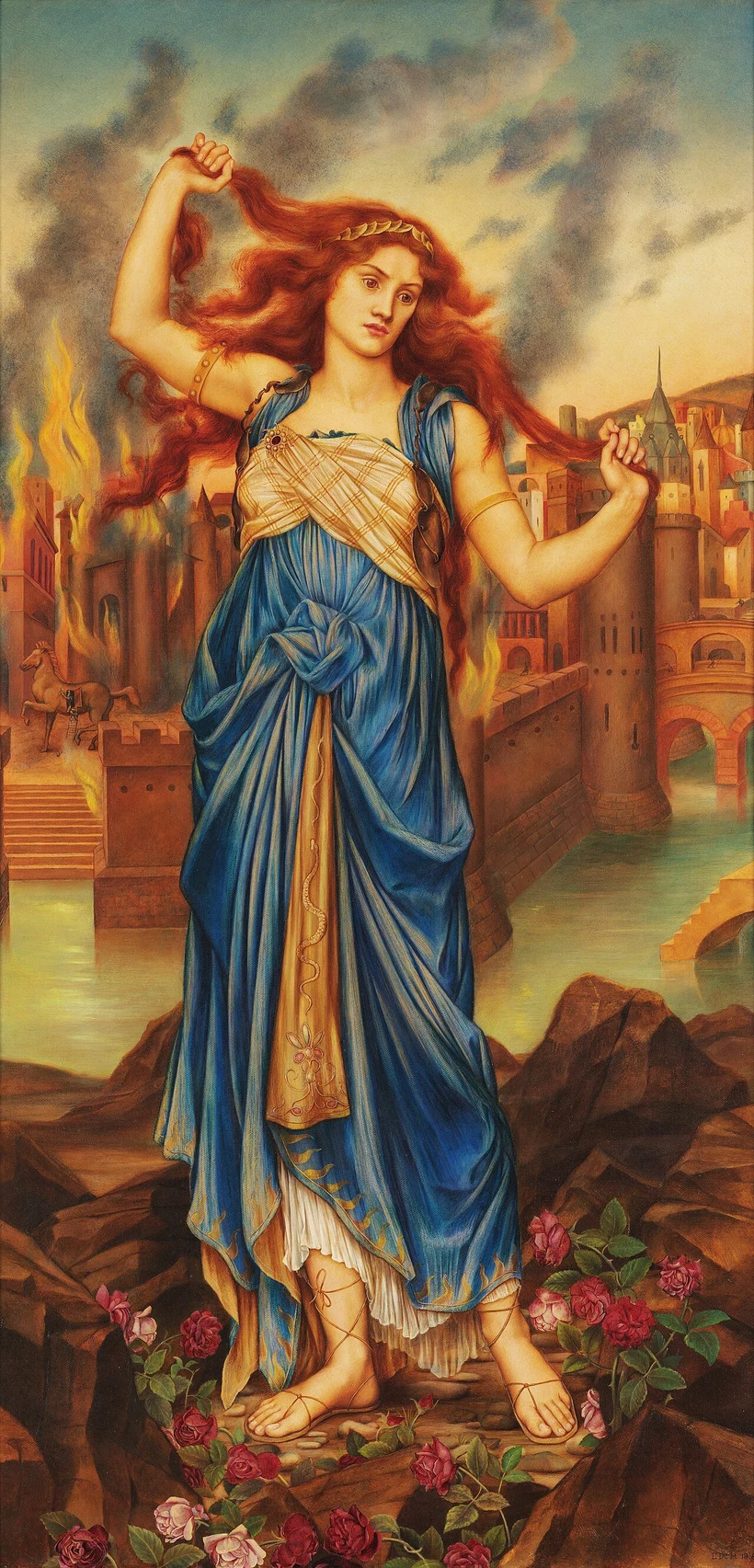
Aeschylus was different. In Agamemnon, the first play of the Oresteia trilogy, she arrives on stage as a captive, Troy already burning behind her, and what follows is one of the more uncomfortable scenes in the classical canon. She knows what is coming. The audience knows what is coming. The chorus stands there and tells her she isn't making sense. Two and a half thousand years later, that scene still resonates.
The Cassandra Myth: The Version Nobody Agrees On
Most people's version of Cassandra was assembled over centuries from sources that don't always agree. The Apollo story, the prophecy granted and then poisoned when she refused him, that's not Homer. The familiar story of Apollo granting Cassandra prophecy and then cursing her appears most clearly in later sources such as Hyginus, Apollodorus and other post-Homeric traditions, working from fragments and probably some amount of invention. What Homer actually gives you is a woman on the edges of a story that isn't hers. Visible, not heard. Whether that's an accident of the sources or simply the most on-brand outcome imaginable is, at this point, impossible to say.
She warned against the horse. The people who needed to listen didn't. That part nobody disputes.
What the Archaeology Actually Shows
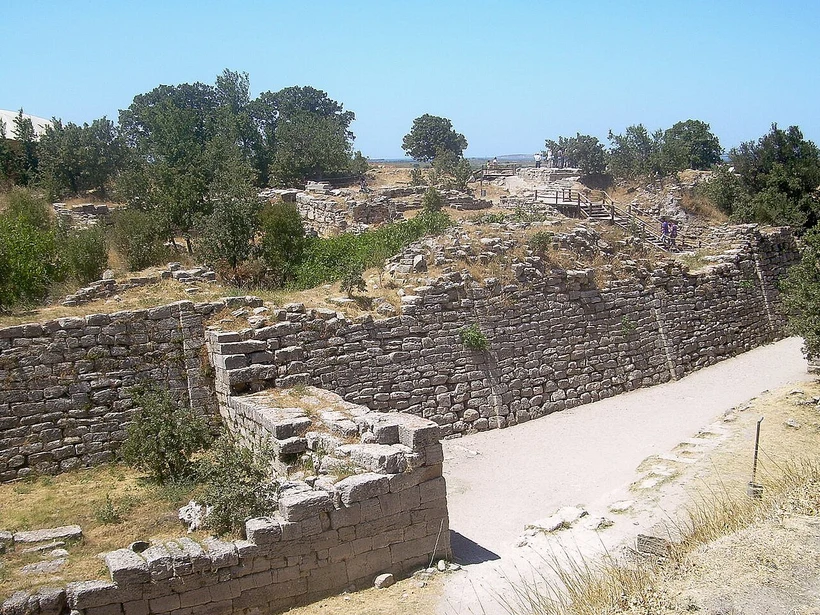
The real Cassandra question is worth asking, though the answer isn't going to satisfy anyone. Troy itself is no longer considered pure invention. Heinrich Schliemann's excavations at Hisarlik in the 1870s identified a site in modern Turkey that most archaeologists now associate with Homer's city, though Schliemann was also a man with a considerable talent for finding exactly what he went looking for, which complicates the picture somewhat. The evidence for a major Bronze Age settlement destroyed by violence around the right period is reasonable. Whether any of the named individuals survived the journey from history into myth is a different question and probably an unanswerable one.
What Tragedy Does With Prophecy
What the mythological tradition tends to do is preserve the shape of an experience rather than its specifics. Someone kept being right and being ignored. The Greeks built a goddess-cursed princess around that. It doesn't require a real woman to make sense of it. Just a recurring situation.
What tragedy does with Cassandra is turn her gift into a punishment, which is a different thing entirely from simply giving her power. Knowledge that cannot be shared or acted on is not really knowledge in any useful sense, it's just suffering with extra steps. The Oracle at Delphi was a functioning institution, consulted by city-states before major decisions. That context matters. For an audience that took prophetic knowledge seriously, Cassandra's curse would have been a particular kind of horror. Not folklore, not metaphor. Something closer to a medical diagnosis with no treatment available.
Why Her Name Outlasted Her Story
What the myth is actually about is not prophecy at all. It is about who gets to be believed, and what happens when the answer is nobody with the right information. The Romans inherited her and, characteristically, didn't do much with her. She moves through the Aeneid briefly, warns against the horse again, gets dismissed again. By the time these versions calcify into what we now consider the standard myth, her role is fixed. She saw it coming and was ignored anyway. That's the whole of it.
The term Cassandra complex emerged in twentieth-century psychology to describe the experience of making accurate predictions that nobody acts on. The term migrated. Risk analysis has its own version of it. So does climate science, so does epidemiology, so does planetary defence, any field where the relevant time horizon is longer than an election cycle or a funding round. At some point the metaphor stops being a metaphor.
Her name became the standard shorthand for that experience because the Greeks built something precise. Prophecy without an audience isn't a gift, they understood that, they put it into the structure of the curse itself. Apollo didn't just make people disbelieve her. He made her keep trying. Keep warning. Keep being right about things that then happened anyway. That is a specific kind of cruelty, and it is still a recognisable one. I think about it when the people with the data are in the room and the people making the decisions aren't listening. Cassandra is still out there. Different job title. Same problem.
Frequently Asked Questions
Who was Cassandra?
Cassandra was a Trojan princess, daughter of King Priam, who appears in Greek mythology as a prophet granted the gift of foresight by the god Apollo. When she refused his advances, he cursed her so that no one would believe her predictions.
Did Cassandra predict the fall of Troy?
Yes. According to the mythological tradition, Cassandra warned against bringing the Trojan Horse inside the city walls and foresaw the destruction that followed. She was ignored, and Troy fell exactly as she said it would.
Was Cassandra a real person?
There is no historical evidence that Cassandra existed as an individual. Troy itself (or a settlement associated with it) has been identified by archaeologists at Hisarlik in modern Turkey, but the named figures from the myth cannot be verified historically.
What is the Cassandra complex?
The Cassandra complex is a term from twentieth-century psychology describing the experience of making accurate predictions or warnings that others refuse to believe or act on. It is now used across fields including risk analysis, climate science and epidemiology.
What is the curse of Cassandra?
Apollo granted Cassandra the gift of prophecy, then cursed her after she rejected him. The curse meant her predictions would always be accurate but never believed. She would see what was coming and be powerless to prevent it.
Where does the Cassandra story come from?
The Cassandra myth draws from multiple ancient sources. Homer's Iliad mentions her briefly. Aeschylus gives her a substantial scene in Agamemnon. Later writers including Hyginus and Apollodorus added details, particularly around Apollo's curse, that are not in Homer.
◆ Also In The Stars


◆ Go Deeper
Recommended
Affiliate links — we may earn a small commission at no cost to you.