15,000 city-killer asteroids are out there right now, on orbits nobody has calculated. We can deflect one if we find it. Finding it is the part nobody's solved.
◆ In Summary
NASA estimates 15,000 near-Earth asteroids large enough to destroy a city remain undetected. Detection covers roughly half the relevant objects. No operational deflection system exists. The 2022 DART mission proved deflection works in principle. The infrastructure did not follow.
What Is a City-Killer Asteroid?
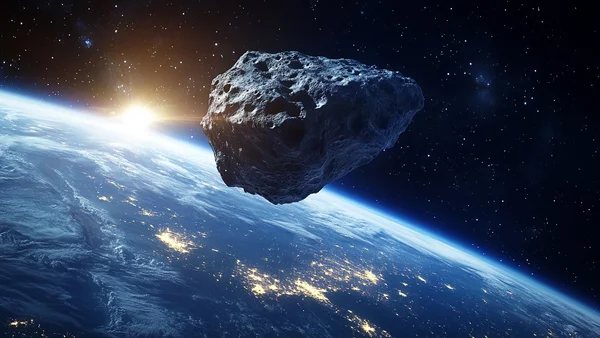
A city-killer asteroid is generally defined as an object around 140 metres across, large enough to devastate a major metropolitan area if it struck Earth. It is not an extinction-level threat like the asteroid that ended the age of the dinosaurs, but it does not need to be. An impact of that size could release energy measured in hundreds of megatons, flattening everything for tens of kilometres in every direction. NASA uses 140 metres as an important threshold because objects above that size are capable of causing regional catastrophe, and thousands of them remain undiscovered.
NASA's City-Killer Asteroid Warning Explained
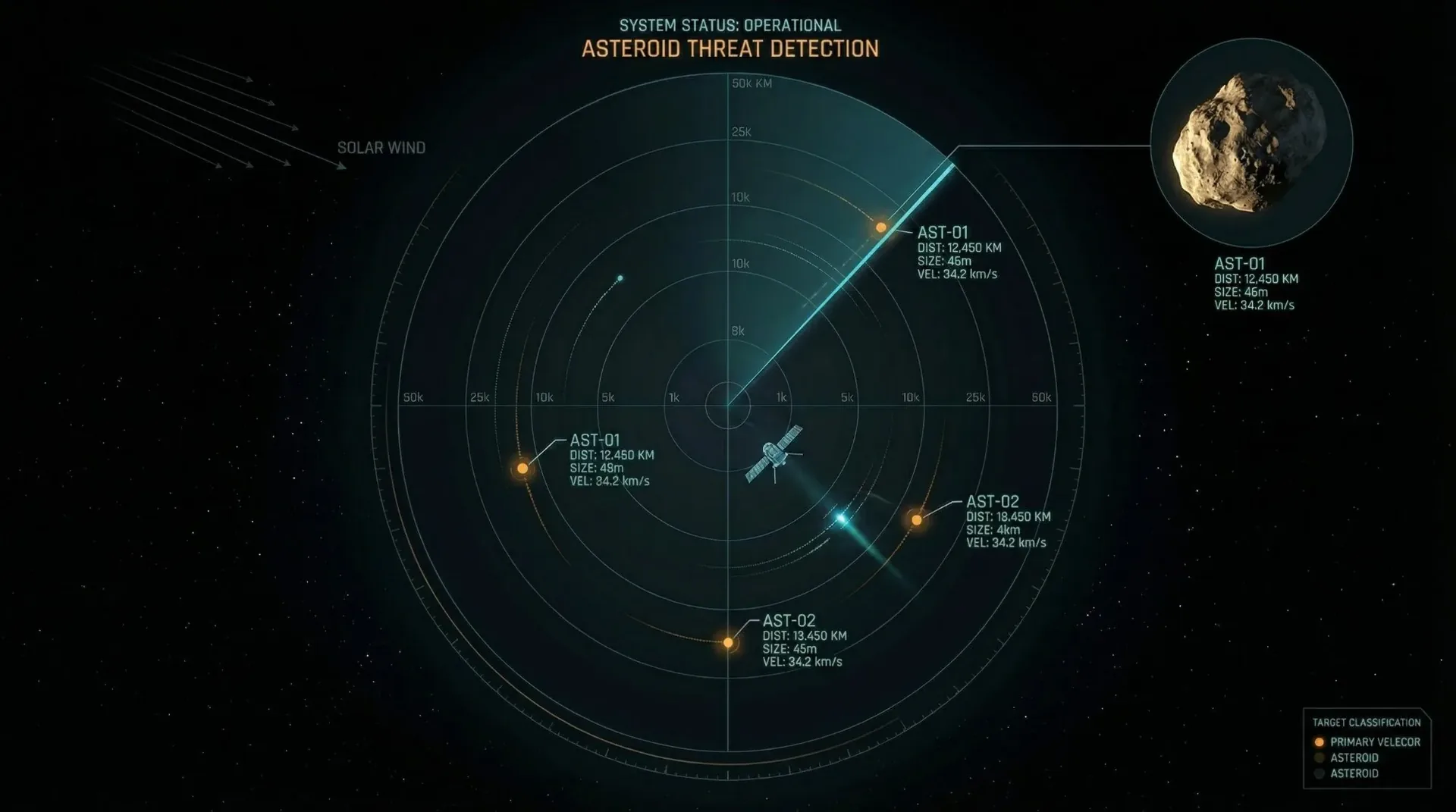
Dr Kelly Fast did not bury the lead. NASA's acting planetary defence officer stood up at the American Association for the Advancement of Science annual meeting in Phoenix in February 2026 and told the room that approximately 15,000 near-Earth asteroids large enough to destroy a city remain undetected. Not hypothetical future ones. Ones that exist right now, moving through the solar system on orbits nobody has yet bothered to calculate.
She put it simply: "What keeps me up at night is the asteroids we don't know about."
Why Are City-Killer Asteroids a Problem?
It ran in a handful of science publications. Most people missed it entirely. That last part is the one worth sitting with.
The concern is not with the largest objects, which are well tracked, or with the small rocks that burn up harmlessly every week. Somewhere in between sits the problem. Objects roughly 140 metres across are large enough to level a city, difficult enough to spot that we have missed perhaps half of them, and numerous enough to matter. "We don't know where 50 percent of the 140-metre asteroids are," said Nancy Chabot of Johns Hopkins University Applied Physics Laboratory, who led the DART mission.
Could We Stop an Asteroid If We Found One?
That is one half of the problem. The other is what happens if you do find one. The DART mission in 2022 proved deflection works in principle, crashing a spacecraft into a small asteroid called Dimorphos at 14,000 miles per hour (Congress has been asked to fund a follow-up operational capability for several years; Congress has, predictably, had other priorities). What DART did not leave behind was anything ready to launch. The demonstration succeeded. The infrastructure did not follow.
How Much Warning Would We Get Before Impact?
Three days. That is how much warning the Zwicky Transient Facility at Palomar gave before asteroid 2026 FM3 passed Earth on 24 March 2026, roughly 148,000 miles out, closer than the moon. For a car-sized object, three days is enough. It would have burned up in the atmosphere. The same notice attached to a 140-metre rock is a different problem entirely.
What Is NASA Doing to Find More Asteroids?
Things are improving; the Vera Rubin Observatory in Chile has been finding previously unknown near-Earth objects at a rate that would have been unthinkable a decade ago. The NEO Surveyor space telescope is in development. Whether either arrives fast enough to close the gap before something closes it for us is a question nobody is answering directly. The same challenge of building long-term space infrastructure can be seen in plans for a permanent Moon base, where success depends not on a single mission but on creating systems that can operate reliably for decades.
Are We Prepared for a City-Killer Asteroid?
The estimated frequency of a 140-metre strike is once every 20,000 years, which sounds like comfortable odds until you remember that comfortable odds require a functioning response system to be of any use at all. Right now it does not exist, at either end. Detection covers roughly half the relevant objects, deflection covers none of them operationally. The 2027 International Asteroid Warning Network exercise will simulate a global response to a confirmed impact scenario. It is the first serious test of whether governments can actually communicate in time. The exercise assumes the asteroid has already been detected. Given that 15,000 city-killers are currently going about their business unobserved, that assumption is doing a lot of heavy lifting.
Dr Fast said it keeps her up at night. The sky is a busy place, we are driving without full headlights, and those two things are connected in ways the official press releases tend to underplay. The ancient sky-watchers would have recognised the situation immediately. They would have had no idea what to do about it either.
What Ancient Sky-Watchers Understood
Prophetic traditions across cultures held that the sky sends warnings before catastrophe, and they were not entirely wrong about the premise. The Babylonians watched for unusual celestial events with genuine attentiveness. They had identified and recorded the Saros cycle by the second century BC before anyone else came close (they were also, it should be said, looking for omens rather than orbital mechanics, but the observational habit was impeccable). Chinese imperial astronomers documented every anomaly, partly out of genuine scientific curiosity and partly because predicting the sky incorrectly carried professional consequences of the terminal variety. Medieval European astrologers catalogued comets and alignments with the same conviction. None of these traditions had contact with each other. All of them arrived at the same conclusion independently: something is out there, and watching carefully is the only rational response.
The mechanism turned out to be orbital mechanics rather than divine communication. The instinct was sound.
Frequently Asked Questions
How many dangerous asteroids are still undiscovered?
NASA estimates around 15,000 near-Earth asteroids large enough to destroy a city remain undetected.
What is a city-killer asteroid?
A city-killer asteroid is generally considered an object around 140 metres across, large enough to devastate a major metropolitan area if it struck Earth.
Could NASA stop an asteroid heading for Earth?
The DART mission demonstrated that asteroid deflection is possible, but no operational planetary defence system currently exists.
What is the NEO Surveyor mission?
NEO Surveyor is a planned NASA space telescope designed to detect near-Earth asteroids that are difficult to spot from Earth. It is expected to dramatically improve asteroid discovery rates.
◆ Also In The Stars


◆ Go Deeper
Recommended
Affiliate links — we may earn a small commission at no cost to you.