The agency that spent $107 billion not quite getting back to the Moon has a new plan, a new deadline, and a name for the announcement that left nothing to the imagination: Ignition.
◆ In Summary
NASA has scrapped the Lunar Gateway orbital station and committed to building directly on the lunar surface, targeting the south pole for its water ice deposits. The programme is the latest chapter of a story that has changed direction before. Whether the political will survives long enough to reach phase three is the question nobody is answering directly.
◆ At a Glance
| Announcement | 24 March 2026, Ignition Day |
| Location | Lunar South Pole |
| Phase 1 | To 2028: uncrewed landings, site selection |
| Phase 2 | 2028 onwards: surface construction begins |
| Phase 3 | From 2032: permanent occupation |
| Total Investment | At least $30 billion |
| China Target | Crewed moon landing 2030 |
| Total Artemis spend to date | ~$107 billion (inflation-adjusted) |
*Update (26 May 2026): NASA is expected to provide a major briefing on its Moon Base strategy and future Artemis missions.*
Why NASA Abandoned the Lunar Gateway
On 24 March 2026, NASA held an event it called Ignition Day. The name was not subtle. The agency scrapped the Lunar Gateway, an orbital space station that had absorbed years of planning and no small amount of international goodwill, in favour of going straight to the surface. "Starting today, we're building humanity's first deep space outpost," said Carlos Garcia-Galan, the programme executive appointed to lead the effort. The line landed without fanfare. That was probably the point. Not a feasibility study. Not a concept paper. A construction announcement.
The pivot had been coming, and the price tag makes that obvious. By 2026, according to the Planetary Society, America will have spent roughly $107 billion in inflation-adjusted dollars trying to get back to the moon, across Apollo's aftermath, Constellation, Artemis, and now this. Each programme change left contractors holding hardware built for something that no longer existed. Some international partners are already looking for answers. HALO, the habitation module that recently arrived in the United States after shipment from Italy, and the I-Hab, still under construction at Thales Alenia Space in Italy, may see their components redirected to the surface base. May. That word is doing a considerable amount of work.
How NASA Plans to Build a Permanent Moon Base
The three-phase plan is at least concrete. Phase one runs to 2028 and is, by NASA's own framing, about earning the right to do the harder things: frequent uncrewed landings, technology tests, working out exactly where on the south pole the base should actually sit. Phase two starts building in earnest. Phase three, from 2032, is where the word permanent starts appearing in official documents without quotation marks around it. Total investment across all three: at least $30 billion.
Why the Moon's South Pole Matters
The moon's south pole is the only location that makes sense, for reasons that are straightforwardly practical. The permanently shadowed craters in that region contain water ice. Water means drinking water, oxygen, and hydrogen for fuel. A base that can extract its own resources is a base that does not depend entirely on resupply from 384,000 kilometres away. That distinction between an outpost we keep alive and a settlement that sustains itself is where the real ambition lives, and NASA is explicitly targeting the latter.
Can NASA Really Make Lunar Exploration Routine?
The existing plan is also, in a more uncomfortable reading, the latest chapter of a $107 billion story that keeps changing its ending. Repeated programme changes across successive presidential administrations are the reason that figure is so large and the moon is still unoccupied (the current total is the kind of number that tends to go unmentioned at Ignition Day events).
Jared Isaacman, the billionaire astronaut now running NASA, reached for an Apollo comparison. Building muscle memory, he called it; the idea being that repetition is how you earn the right to attempt harder things, the same way the agency ground through Gemini before Apollo. It is a reasonable argument.
It also assumes the political will to keep grinding exists, which is where the Apollo comparison starts to wobble. What Apollo had was an expiry date baked in from the start. Six landings in three years, then fifty years of nothing. The ambition here is structurally different: beginning with Artemis III, NASA wants a moon landing every year, increasing to every six months as commercial launch providers come online.
Routine. That is the word that has never applied to human presence on the moon. It is the word this entire plan is built around.
The New Moon Race With China
The reasons behind the pivot from Gateway to a surface base are partly practical and partly political. China is making significant progress toward its own lunar ambitions, with a crewed moon landing targeted for 2030, and the competition for resources and presence on the lunar surface is increasingly framed in Washington as a strategic priority rather than a purely scientific one. The nation that establishes regular operations first will shape what is and is not considered normal on the lunar surface, in the same way that building first in Antarctica tends to define what neighbouring territory looks like. International space law sets out broad principles. Those principles gain meaning through repeated presence. And on the lunar south pole, where the water ice is and the landing sites are limited, presence is the whole argument.
What a Permanent Moon Base Will Actually Look Like
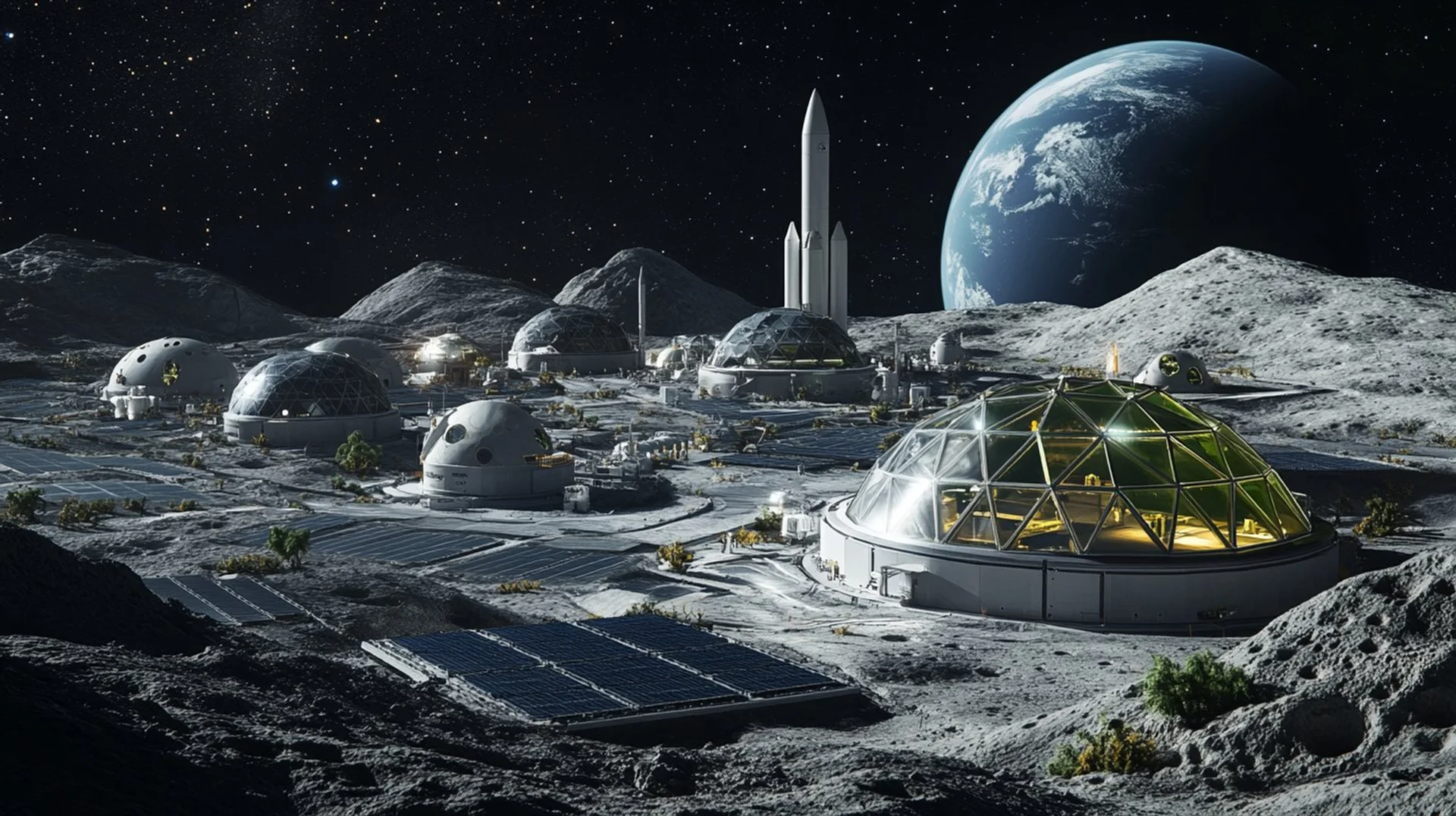
What it will look like physically is less cinematic than the twentieth century imagined. The long-term vision calls for a semi-permanent, expandable outpost featuring habitats, rovers, power systems, landers and supporting infrastructure, with contributions from international partners including the Italian Space Agency's multi-purpose habitats and the Canadian Space Agency's lunar utility vehicle. It will not look like science fiction imagined it. It will probably look more like a research station in Antarctica than the gleaming domed cities that populated twentieth century visions of the future. Functional, modular, incrementally expanded, unglamorous in the details even if extraordinary in the fact of its existence.
When Will Humans Live Permanently on the Moon?
But it will be there. Humans, living on the moon. Not visiting. Living.
The Artemis II crew who completed their lunar flyby in April 2026 are the immediate precursors to all of it. Artemis II: The First Crewed Moon Flight Since Apollo was the first step towards making a permanent lunar presence possible. Somewhere between their trajectory around the moon and 2032, humans will land at the south pole and begin building something that is meant to still be there when the people who built it are gone. Whether the schedule holds, whether the budget survives, whether the political will outlasts the administration that created it; these are genuine questions without reassuring answers. The history of this particular programme does not encourage complacency. But the plan exists, the money is allocated, and someone has decided to call it Ignition.
Frequently Asked Questions
Is China building a Moon base too?
China is pursuing its own lunar exploration programme and has stated ambitions to establish a permanent presence near the Moon's south pole. The growing competition between the United States and China is one reason lunar exploration has become a strategic priority.
Will people live permanently on the Moon?
That is NASA's long-term goal. Early missions will involve temporary stays, but the planned lunar base is intended to evolve into a continuously occupied outpost supported by local resources and regular supply missions.
Why was the Lunar Gateway cancelled?
NASA decided to prioritise a permanent surface outpost over the Lunar Gateway space station. Agency officials argued that resources would be better spent building infrastructure directly on the Moon rather than in lunar orbit.
Why is NASA building a base at the Moon's south pole?
The lunar south pole contains permanently shadowed craters that appear to hold significant quantities of water ice. That ice can potentially be turned into drinking water, oxygen and rocket fuel, making long-term human presence far more practical.
When will humans return to the Moon?
NASA currently plans to return astronauts to the lunar surface with Artemis III. The wider lunar base programme aims to establish a permanent presence at the Moon's south pole during the 2030s.
◆ Also In The Stars
◆ Go Deeper
Recommended
Affiliate links — we may earn a small commission at no cost to you.