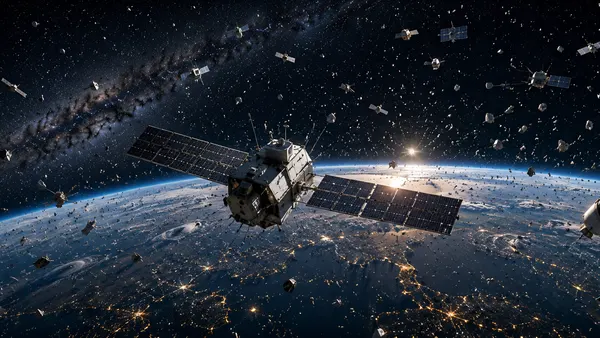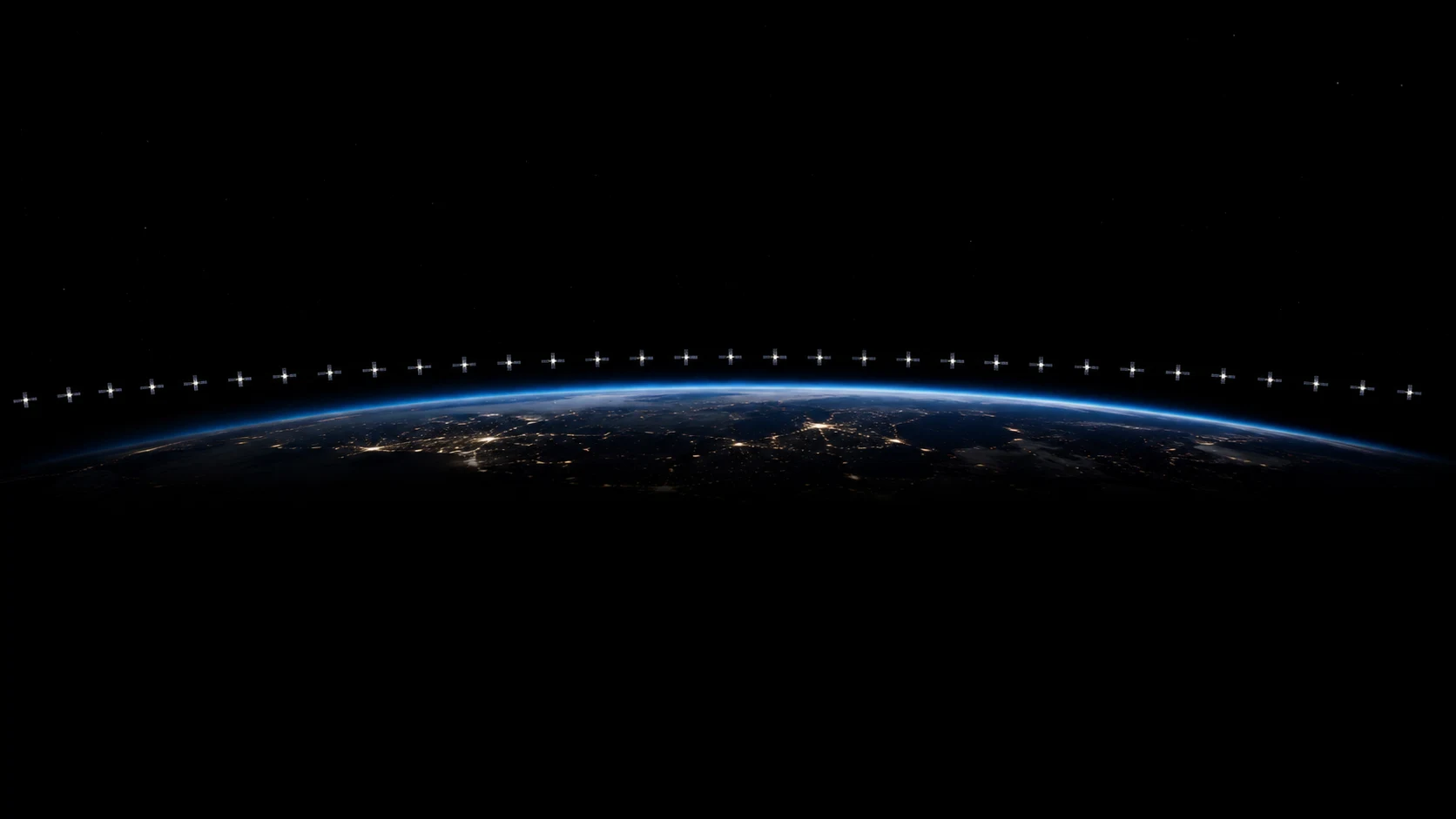
SpaceX once talked about rebuilding the internet in space. What it actually built now accounts for more than half of every active satellite in Earth orbit.
◆ In Summary
Different trackers give different answers on any given day, but by early July 2026 there were more than 10,700 working Starlink satellites in orbit, up from the first 60 launched in May 2019. That's more than half of every active satellite currently circling Earth. Getting there took reusable rockets doing something nobody else had done at that scale, a decade of scepticism and enough capital to keep going through years of losses. It also turned out to be SpaceX's only consistently profitable operating segment, which is precisely why the company could go public at all. Seven years is not a long time to build the largest satellite network in history.
How Many Satellites Does Starlink Have Right Now?
Ask three different trackers this question on the same day and you'll get three different numbers, and none of them will necessarily be wrong. Jonathan McDowell's tracking table, the one journalists and regulators actually cite when they need a real number, put the working fleet at 10,722 satellites on 1 July 2026, with a further 16 classed as failed or decaying but still physically in orbit. CelesTrak, working from slightly different orbital data, counts some of those as still active, putting the figure closer to 10,780 in the same week, and both are right by their own methodology. Musk himself marked the constellation passing 10,000 satellites on 5 June 2026, in a post that read, in full, like a company announcing it had shipped another parcel rather than crossed a threshold nobody else in history has reached.
The numbers aren't wrong per se, it's just what happens when a constellation this size never actually stops moving. Satellites launch in batches of two dozen or more, get catalogued and checked before they're counted as operational, then older ones get deliberately deorbited on a rolling basis. The honest answer to the headline question isn't a single clean number. It's more than 10,700, rising by dozens most weeks.
From an Idea Nobody Believed to 60 Satellites
SpaceX first talked about this publicly on 16 January 2015. Musk described a constellation of roughly 4,000 satellites and called it, without much modesty, rebuilding the internet in space. At the time, SpaceX hadn't yet landed a single booster. The idea that this company would also build and operate the largest satellite constellation in history sounded, to a lot of people who followed the industry closely, like hyperbole.
SpaceX's plans have grown considerably since that original pitch. The company holds FCC approval for 12,000 satellites and has filed for permission to deploy 30,000 more beyond that. Beyond Starlink, SpaceX has also proposed a separate orbital data-centre constellation of up to one million satellites, though the idea remains highly speculative.
It took more than four years to launch anything. The first 60 Starlink satellites went up on 23 May 2019, released all at once from a single Falcon 9 upper stage. There wasn't a dedicated release mechanism for each one. SpaceX spun the entire stage instead, using each satellite's own rotational inertia to fling it loose at a slightly different moment, a method Musk himself warned reporters would look unusual. The onboard footage bears that out, though not in a dramatic way. It just looks like an indistinct mass drifting free of the rocket. Nothing in the frame tells you you're watching the birth of the largest satellite constellation in history.
The Real Reason the Number Got This Big
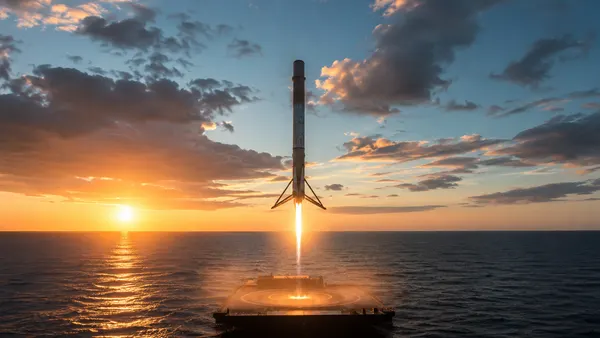
The genuinely interesting part of this story isn't the satellites. It's the rocket underneath them. Falcon 1 nearly bankrupted SpaceX twice before it ever worked. The lesson that survival taught the company, land it, refuel it, fly it again, is honestly the entire reason a constellation this size was ever financially possible, not some later stroke of genius.
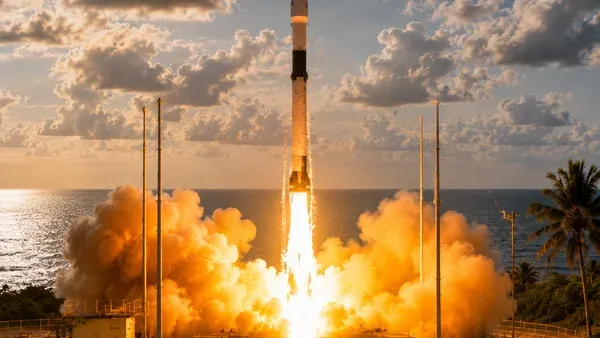
A single Falcon 9 launch can carry roughly two dozen Starlink satellites at a time, and here's the number that still catches me off guard: SpaceX now flies that same rocket more often than once every three days, a cadence no other launch provider on Earth has ever come close to matching. Crucially, most of those flights aren't even for outside customers anymore. Nearly three-quarters of all Falcon 9 launches now carry SpaceX's own Starlink satellites rather than a paying client's payload, which means the company is effectively running its own private, dedicated delivery service to build a product only it needed. Reusable rockets weren't a nice efficiency gain here. They were the only way this specific business could exist at all, since expendable rockets at this launch cadence would have made the whole constellation unaffordable long before it reached any meaningful scale.
The Milestones Along the Way
The rest of the growth curve reads less like a slow climb and more like a series of thresholds crossed one after another. Starlink began its public beta in October 2020, and by February 2021 it had passed 10,000 users, a modest number for a company with such lofty ambitions. By 2022 that had grown past a million, and it just kept doubling from there, 2.3 million by the end of 2023, then 4.6 million a year later. I didn't quite believe the 10 million figure when it crossed in February 2026, and yet four months later it was already over 12 million, spread across more than 160 countries and territories.
The hardware kept pace with the user base too. The original satellites weighed around 260 kilograms each, barely more than a large fridge freezer, if you want a genuinely odd way to picture a satellite. The current V2 Mini design weighs nearly three times that, carrying far more communications capacity per launch. A newer V3 design, capable of roughly a terabit per second of downlink throughput against roughly 80 gigabits for a V2 Mini, is too large to fly on Falcon 9 at all. It needs Starship, and the first flight of the Starship V3 vehicle needed to deploy them took place on 22 May 2026.
Direct-to-cell service, letting an ordinary mobile phone connect straight to a satellite without any special hardware, expanded across six continents in 2025 alone, which is the kind of feature that sounded like science fiction the first time I read about it. None of that was part of the original 2015 pitch, and that's rather the point. All of it got built anyway, because the constellation kept generating the revenue to fund the next version.
It Isn't Growing Alone
Starlink's size can make it easy to forget it isn't the only company trying this. Amazon's competing constellation, rebranded from Project Kuiper to Leo, entered beta in April 2026 backed by $10 billion of Amazon's own money, and claims download speeds that could outpace Starlink's typical service. China's Qianfan and Guowang constellations are both actively deploying satellites of their own, part of a broader push to avoid depending on an American-owned network at all.
None of them are close to Starlink's scale yet. By most tracking estimates, Starlink alone now accounts for more than half of every active satellite currently in Earth orbit, a bigger share than every other satellite operator on the planet combined. One company now controls more of near-Earth space than the rest of the industry put together. That scale hasn't come without controversy. Why astronomers hate Starlink goes through some of the criticism Starlink has faced, and how much of it actually holds up.
What All Those Satellites Were Actually Worth
On 12 June 2026, SpaceX completed the largest initial public offering in history, a sentence I did not expect to be writing back when this constellation launched its first sixty satellites seven years earlier. Shares priced at $135 and opened at $150 on the Nasdaq under the ticker SPCX. By the close of that first day the stock sat around $161, up roughly 19%, and the company's market capitalisation had already pushed past $2 trillion. SpaceX's own IPO filing showed its space launch business and its newer AI division both operating at a loss. Starlink was the only consistently profitable part of the entire company, generating over $11 billion in 2025 revenue on its own.
Whatever the market makes of SpaceX as a company, the satellite count itself doesn't wait for anyone's valuation model to catch up. More than 10,700 working satellites are in orbit as this is written, and that number will be different, almost certainly higher, by the time you read it. Ask again next month and you'll get a new answer. That's not a flaw in the tracking. It's just what a constellation this size actually looks like: never finished, never still, and bigger every time anyone checks.
Frequently Asked Questions
How many satellites does Starlink have?
More than 10,700 Starlink satellites were actively working in orbit as of early July 2026, according to independently tracked data, with the exact figure varying slightly day to day as new batches launch and older satellites are retired.
When did Starlink launch its first satellites?
SpaceX launched the first 60 Starlink satellites on 23 May 2019. The project had been publicly announced in January 2015, but it took more than four years before any satellites actually reached orbit.
How did Starlink grow so large so quickly?
Reusable Falcon 9 rockets made the scale financially possible. SpaceX now flies Falcon 9 at a cadence no competitor has matched, and nearly three-quarters of those launches carry Starlink's own satellites rather than paying customers' payloads.
Is Starlink profitable?
Yes. Starlink generated over $11 billion in revenue in 2025 and was the only consistently profitable part of SpaceX's business, according to the company's own IPO filing ahead of its June 2026 Nasdaq listing.
◆ Also In The Stars
◆ Go Deeper
Recommended
Affiliate links — we may earn a small commission at no cost to you.