NASA has funded real research into inducing torpor for the months-long trip to Mars. That's one thing. A trip to the stars is another matter entirely.
Could Suspended Animation Achieve Interstellar Travel?
◆ In Summary
There turn out to be two potential routes to suspended animation for an interstellar voyage, and neither one on its own gets humans to the stars: torpor doesn't last long enough, and nobody's proven vitrification works on a human, let alone for centuries. Torpor, a NASA-funded, bear-like metabolic slowdown, is designed for a Mars-length trip and could cut mission mass by over half, but nothing extends it past months, and none of it has actually been tested yet. Vitrification could in principle last indefinitely, and organ-scale revival is real and improving. But nobody has revived a whole mammal, and what it would ask of a healthy astronaut, being brought to a state indistinguishable from death on the hope of later revival, has no real precedent to draw on. Either way, something has to stay conscious to watch over the crew, and that's almost certainly a machine rather than a person. The upside, if either technology closed its gap, is that the original crew would arrive still believing in the mission they left on, an open question for a generation ship's descendants, who never chose it in the first place.
What Is Suspended Animation for Interstellar Travel?
In the article on interstellar travel, I looked at whether it's physically possible at all, and the short version is: for a probe, plausibly, but only once a few more decades of engineering actually get done. For a human, the physics doesn't forbid it, but the engineering gets brutal fast. Voyager 1 would need 73,000 years to reach the nearest star at its current speed, which tells you everything about how far "possible" is from "practical." The honest answer to whether we could send a person is that we'd need a completely different approach to the journey itself, not just a faster rocket.
Getting Humans There Alive
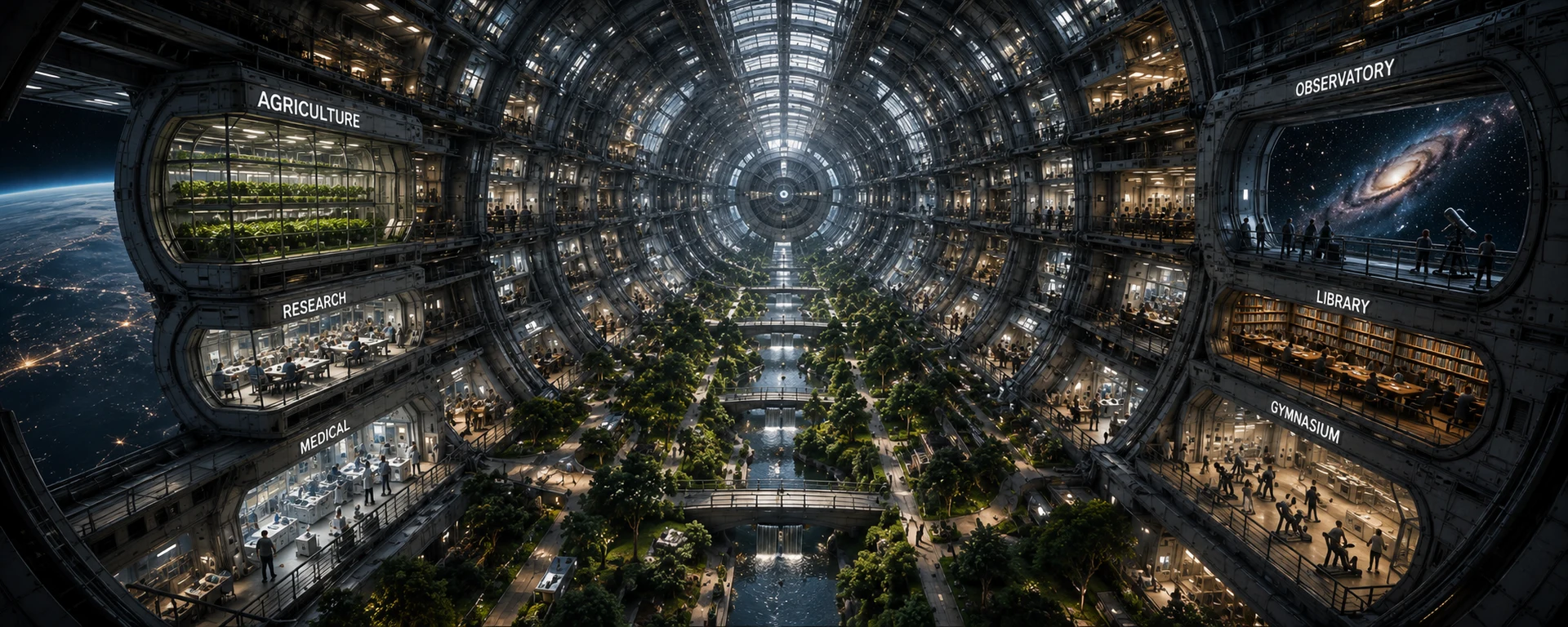
The traditional answer is the generation ship: a crew that boards knowing only their descendants will arrive. I've gone through why that's a harder problem than it sounds, mostly because you're asking people to be born into a mission they never chose, in a vessel they can never leave, and keeping a functioning society intact across centuries turns out to be a much bigger gamble than the propulsion. The obvious alternative is to skip the "raising generations aboard a ship" part entirely, and instead keep the original crew alive, or at least preserved, until they arrive. That's the idea I want to actually explore here, because it turns out to be two quite different technologies wearing the same name.
What Suspended Animation Actually Is
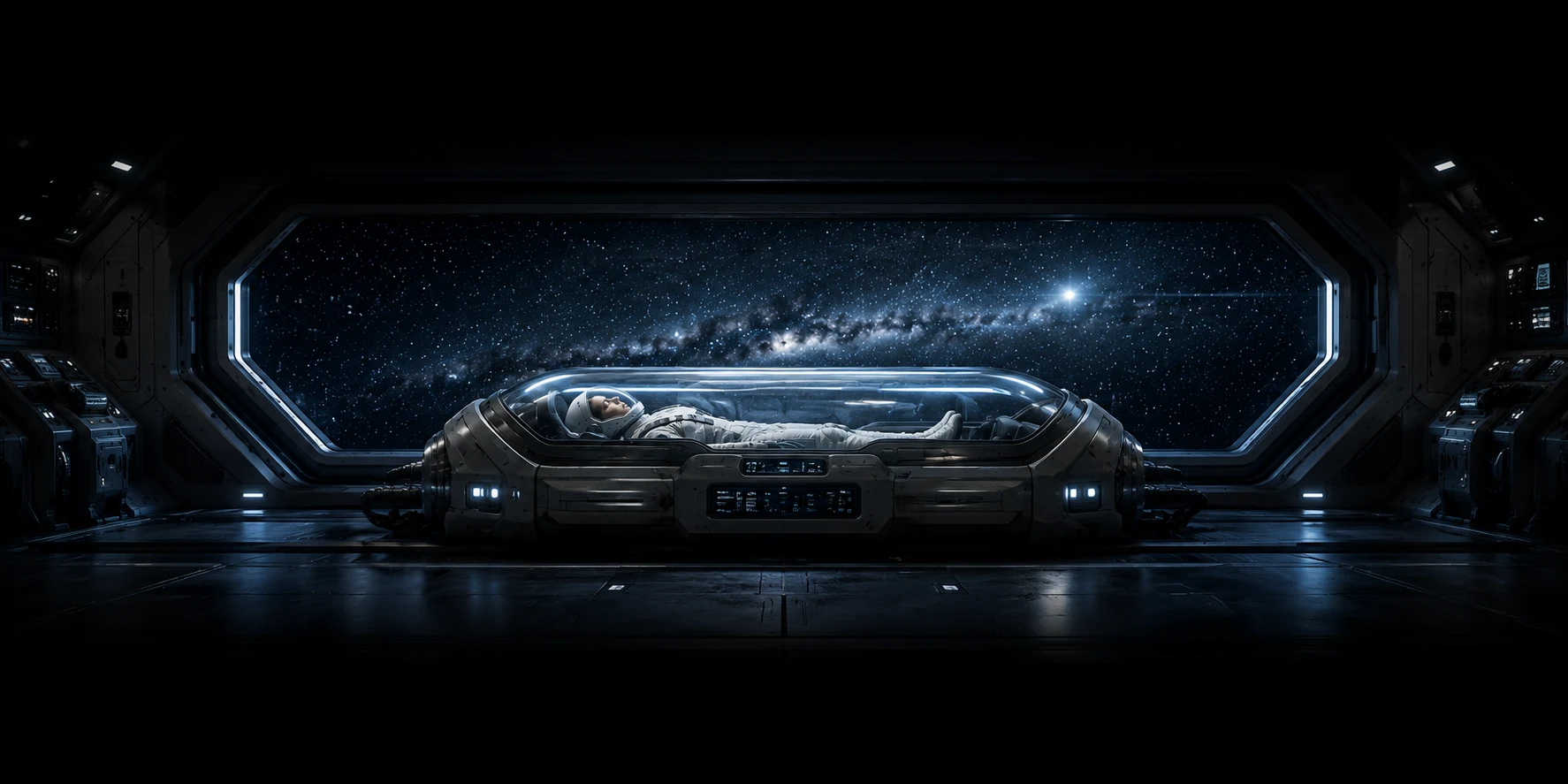
Suspended animation, in the form NASA has actually funded, isn't cryonics as most people picture it. Nobody's freezing anyone solid. It's torpor. That's a deliberately induced, bear-like drop in metabolic rate, achieved through therapeutic hypothermia, the same basic cooling technique hospitals have used in various forms for decades, particularly to limit injury following cardiac arrest and certain neurological emergencies. The person stays alive the whole time, just running much slower. The underlying cooling technique is existing medicine. Keeping a healthy person in that state for weeks or months is not.
The Technology Behind It
NASA has actually put money behind this. SpaceWorks Enterprises, under engineer John Bradford, ran a NASA Innovative Advanced Concepts study through two funded phases, designing a torpor-inducing habitat for a Mars transfer vehicle (the study itself is an engineering and mass-budget exercise; nobody has actually tested torpor on a human, or an animal in a space-relevant setting, for this purpose). Their proposed architecture puts 96 crew into torpor alongside 4 active astronauts.
The numbers are the real selling point. SpaceWorks estimated that a torpor-based Mars mission could reduce total mission mass by 52 to 68%, because a metabolically quiescent crew would require dramatically less food, water, oxygen and living space. Some estimates suggested food and water requirements alone could fall by as much as 75%. Researchers have also proposed that torpor might reduce some of the biological damage associated with long-duration spaceflight. Studies in animals suggest it could lessen radiation damage and slow tumour growth, while helping to limit bone density loss and muscle atrophy. Whether those benefits would extend to humans in space, however, remains unproven.
How Plausible Is It, Actually
This is where I think the honest caveat belongs, because the studies are real and serious, but still fall well short of the mark. Nothing here has actually been tested on a human, or an animal in a space-relevant setting. What exists is a design built on real, working medicine, therapeutic hypothermia, extended out to durations nobody's tried. So let's grant the generous assumption: say it works exactly as proposed.
Even then, every proposed torpor cycle runs for days to a couple of weeks at a stretch, with periodic waking built in, aimed squarely at a 6 to 9 month Mars transit. Nothing in the published research extends this to years, and even the animal comparison has a limit built into it: bears cycle in and out of torpor across a single winter, they don't stay under for even a year, let alone several centuries. So the plausible claim is "this measurably helps a Mars mission, if it works as proposed." The claim "this solves a multi-century interstellar voyage" isn't supported by anything currently on the table, proven or hypothetical. Once humans travel any further than Mars, it all falls apart.
The Other Option
Where torpor borrows from real medicine and hibernating animals, this next approach really does sound like science fiction. Vitrification uses cryoprotectant chemicals to cool tissue into an ice-free, glass-like state, after which it can be stored at temperatures around -196°C. The cryoprotectants prevent water inside the cells from forming the ice crystals that normally rupture cell membranes during freezing. Instead, the tissue solidifies into an amorphous, glass-like structure. Avoiding ice crystals preserves tissue far better than ordinary freezing, although cryoprotectant toxicity and safely rewarming the tissue remain major challenges. Unlike torpor, which merely slows metabolism, vitrification effectively brings normal biochemical activity to a halt.
The research here is real and improving fast. A vitrified rabbit kidney was thawed and transplanted back into a living rabbit in 2005, and the animal lived on that kidney alone before being euthanised afterwards for tissue analysis. In 2023, a vitrified rat kidney was revived after 100 days in storage using magnetic "nanowarming" to rewarm it evenly. Both are genuine revivals: an organ vitrified, then brought back to full function in a living animal.
There's also been progress on a rabbit's brain, though the focus there was preservation, not revival. A team won the 2016 Brain Preservation Foundation prize for showing a vitrified rabbit brain's full wiring map stayed structurally intact. But the process itself kills the animal: a chemical fixative is perfused directly into the living brain's blood vessels, which halts all activity outright. The goal was proving the brain's connections survive well enough to be mapped by future scanning technology, not reviving the animal, and nothing about the method suggests it could be. So the genuine revival precedent stops at organ-scale, and even there, nobody has revived a whole mammal. Complexity, it seems, is where the failures start.
The Ethics of It
For a deliberate vitrification scenario, the ethics get harder rather than easier the more you think about it. Existing cryonics practice only ever begins after death: someone is declared legally dead, usually from a terminal condition, and is then vitrified in the hope that future medicine can revive them. Nobody is choosing this while healthy, and nobody expects to be brought back next year. What's being proposed here is a different thing entirely: a healthy astronaut would need to be deliberately brought to a state indistinguishable from death, not because they're dying, but on the hope that they can be restored at the other end of a centuries-long voyage.
Every existing legal and ethical framework for hastening death, assisted dying laws included, is built around irreversibility and terminal illness, someone dying anyway, choosing to control how. This is closer to the opposite: the healthiest people alive, agreeing years in advance to a state indistinguishable from death, on the understanding that a machine will bring them back. Consent itself gets harder to take at face value too, since a crew member recruited for a multi-century voyage is choosing this years or decades before the procedure is completed, for a version of themselves that hasn't lived through it yet. And unlike torpor, whose periodic waking cycles give someone repeated chances to change their mind, vitrification offers exactly one: before it happens. Once it does, nobody's checking in on you for centuries.
Who Watches the Crew?
Both approaches also share a problem neither one solves on its own: something has to stay awake. A ship full of torpid or vitrified passengers still needs a custodian checking vitals, managing the ship, and handling whatever goes wrong across centuries nobody aboard is conscious for. That custodian is almost certainly a machine, not a rotating human watch, since a human "caretaker" role just reintroduces the generation ship's entire social problem for one unlucky crew member. That alone asks for a level of machine autonomy that doesn't exist yet.
The Verdict
So which one gets a crew to another star? Neither, not as things stand, though for genuinely different reasons. Therapeutic hypothermia already works in medicine, in the sense that patients are cooled and successfully rewarmed, but nothing suggests the prolonged torpor proposed for spaceflight scales past months. Vitrification might scale indefinitely, but nobody's shown it works on a whole mammal, of any size.
What's interesting is that if the biology ever did get solved, it would answer a question the Generation Ships piece left open: whether an arriving crew still believes in the mission they left on. Wake the original travellers rather than their descendants, and the people who remember why they left are the ones who arrive. That's worth something.
Frequently Asked Questions
What is suspended animation for space travel?
It generally refers to torpor, a deliberately induced drop in metabolic rate similar to hibernation, achieved through therapeutic hypothermia. NASA has funded research into this for Mars missions. It is different from cryonics, which aims to preserve someone at much lower temperatures for far longer.
Has NASA actually researched suspended animation?
Yes. SpaceWorks Enterprises received NASA Innovative Advanced Concepts funding across two phases to design a torpor-inducing habitat for Mars transfer vehicles, estimating a 52 to 68% reduction in total mission mass by putting most of the crew into torpor for the journey.
Could suspended animation work for a multi-century interstellar voyage?
Not based on current research. Proposed torpor cycles run for days to a couple of weeks at a time, aimed at a 6 to 9 month Mars transit. Nothing published extends this to years, let alone centuries, and even hibernating animals only sustain torpor across a single winter.
What is vitrification and how is it different from freezing?
Vitrification cools tissue into a glass-like state rather than allowing ice crystals to form, which is what damages cells during ordinary freezing. It has been used to successfully preserve and revive organs, including a rabbit kidney in 2005 and a rat kidney in 2023, but never a whole mammal.
◆ Also In The Stars

◆ Go Deeper
Recommended
Interstellar Travel: An Astronomer's Guide
Amazon ↗
Affiliate links — we may earn a small commission at no cost to you.