Stephen Hawking helped launch it, Mark Zuckerberg backed it, Yuri Milner funded it, and nine years later even the people who designed it can't agree on what happened to it.
◆ In Summary
Breakthrough Starshot launched in 2016 with $100 million from Yuri Milner and the public backing of Stephen Hawking, promising an interstellar probe reaching Alpha Centauri within 20 years. It proposed skipping fuel entirely, accelerating gram-scale sails with ground-based lasers rather than following the nuclear and fusion approaches of Project Orion and Project Daedalus before it. Around $4.5 million can be identified in publicly reported contracts, although estimates of total spending vary considerably. NASA and ESA never formally joined. By 2025, reports described the project as having gone quiet, though Starshot scientist Jim Benford has since disputed that framing, arguing Phase I succeeded on its own terms. Either way, any probe would still be roughly a decade from launch even on the original optimistic timeline.
It's been a fascinating few weeks writing about aspects of interstellar travel and this will probably be the final article on the subject, at least for a while. It's an interesting place to pause, as this article covers the most significant attempt to reengage with interstellar travel in recent years. It highlights that the will is there but other factors still make it a very big leap to make.
For many space enthusiasts, including me, interstellar space is the ultimate goal. Of course, the moon and Mars are places humans should be colonising soon, but the thought of journeying to a planet in another star system is very enticing. It's also very unlikely to happen for hundreds if not thousands of years, if ever. Probes going interstellar, now that's another matter, and perhaps represents our best chance of reaching another star, at least in our lifetimes.
Breakthrough Starshot Announced
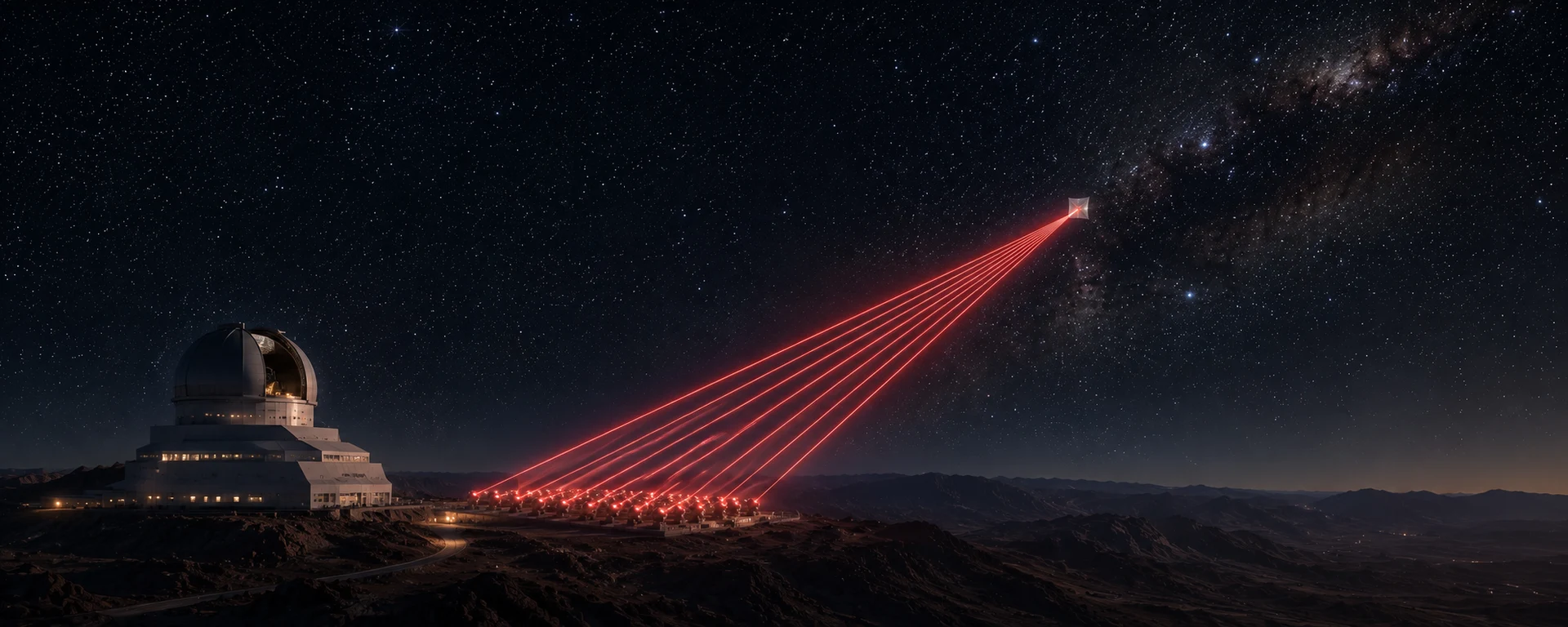
In 2016, an ambitious project was launched that aimed to achieve just that. The idea was to launch gram-scale probes mounted on ultra-thin reflective sails and then accelerate them via 100 gigawatts of power delivered from an array of ground-based lasers. All being well, this could allow the probes to reach a velocity of around 20% light speed. The destination would be Alpha Centauri, with an estimated journey time of 20 years.
Breakthrough Starshot was the brainchild of Yuri Milner. A physicist by trade and later a venture capitalist, he was also the primary funder, pledging $100 million via Breakthrough Initiatives (an umbrella organisation bankrolled by Yuri and his wife Julia) to help make it happen. He was supported by a cast of famous names including Stephen Hawking, who gave the project popular scientific credibility, and Mark Zuckerberg, a board member, who helped give the project considerable visibility. Former NASA Ames director Pete Worden, the project's executive director, was another key figure alongside Avi Loeb and Freeman Dyson, who offered scientific advice and expertise. Dyson was previously involved in Project Orion, which was a plan to achieve interplanetary space travel with the use of nuclear bomb detonations.
Previous Interstellar Projects
The notion of ambitious interstellar projects wasn't new. Project Orion was conceived in the 1950s and had the novel yet concerning plan to propel a spacecraft with nuclear bomb detonations. Any possibility of it gaining traction was stopped by the 1963 Partial Test Ban Treaty, which added to the feeling that exploding nuclear weapons above the skies might not be a wise idea.
The next major interstellar project came in 1973. It made the wise decision to drop the nukes and settled on fusion as a means of propulsion. The two-stage craft would be unmanned and burn pellets of deuterium and helium-3 with a target speed of 12% light speed. It would aim to reach Barnard's Star, some 5.9 light years away, in approximately 50 years. The craft had no means of deceleration, but would have a few hours of observation before journeying onward. 50 years, for only a few hours of close observation.
What Made Breakthrough Starshot Different?
Fuel is clearly one of the problems facing any interstellar probe. While nuclear detonation and fusion were the choice for the previous projects, Starshot proposed a clever alternative. Rather than having an onboard fuel source, the gram-scale probes (weighing about a gram, roughly the same as a paperclip) would first be launched into orbit by a mothership. Then, as mentioned earlier, laser beams on Earth would be fired up through the atmosphere, hit the probes' sails and accelerate them to 20% light speed. The probes would then coast at that speed with enough velocity to make the journey without any further help from the beams.
Where Was the Money Coming From?
Milner estimated that the project would cost in the region of $5-10 billion. Given he pledged $100 million via Breakthrough Initiatives, that still left the vast majority of the budget to be covered. NASA and ESA were reportedly approached but remained cool on the idea. It is possible that they saw the 100-gigawatt laser array as a stumbling block, fearing it could raise geopolitical concerns if they became involved. In terms of spending, a number of contracts were signed for various services, amounting to around $4.5 million, a small part of the $100 million pledge.
Where Is Breakthrough Starshot Now?
Not long after the initial flurry of activity, the project largely went quiet. The current status depends on who you care to believe.
In 2025, Scientific American reported that there had been no more big announcements and that people close to the project were unsure quite what was happening. Some scientists said they had dropped out due to lack of funding and hadn't been contacted by any of the organisers. Pete Worden, Starshot's executive director, apparently confirmed by email that the program was on hold and that portions of the project would be transitioned to others. According to public accounts, under $10 million had been spent.
In contrast, Jim Benford, sail team lead, claimed in March 2026 that Phase 1 had succeeded and that Starshot hadn't been cancelled. Phase 2 would begin once broader support had been found. He also questioned the $10 million figure, suggesting that closer to $25 million had been spent.
I'm obviously in no position to say which account is correct. Either way, it seems the project is in a tricky spot. Certainly a disappointment to those of us who had hoped this would herald interstellar travel in our lifetime. Based on the projected pipeline at the beginning, it would still be ten years away from launch. It's safe to say that this project isn't launching any time soon, even if it suddenly got back on track.
So where does that leave us? Still in our solar system, I'm afraid. There aren't many other projects of note that propose interstellar travel, other than maybe Project Hyperion, which is exploring a crewed generation ship. As Elon Musk has demonstrated, most of the money is now focussed on the moon and Mars, which is still a positive.
Frequently Asked Questions
What happened to Breakthrough Starshot?
By 2025, reports described Breakthrough Starshot as having gone quiet, with no major announcements, meetings or new funding since its early years. Pete Worden, the project's executive director, confirmed by email that the programme had been put on hold, though sail team lead Jim Benford has since disputed that framing, arguing Phase I met its stated goals and the project is paused rather than dead.
How much did Breakthrough Starshot actually spend?
Public accounts put spending at under $10 million, with one detailed calculation citing around $4.5 million across roughly 30 contracts, a small fraction of the original $100 million pledge. Jim Benford has disputed this, arguing the real figure across the programme's eight years was closer to $25 million once staff and meetings are included.
How fast would Breakthrough Starshot's probes have travelled?
The plan called for gram-scale probes mounted on lightsails to be accelerated by a 100 gigawatt ground-based laser array to around 20% of the speed of light, reaching Alpha Centauri in approximately 20 years.
Who funded Breakthrough Starshot?
The project was funded by Yuri Milner, a physicist turned venture capitalist, through Breakthrough Initiatives, an organisation he ran with his wife Julia. Milner pledged $100 million towards the project, with Stephen Hawking and Mark Zuckerberg among its high-profile early supporters.
◆ Also In The Stars
◆ Go Deeper
Recommended
Affiliate links — we may earn a small commission at no cost to you.